Showing posts with label tv. Show all posts

Sunday, September 8, 2024

The Trip Not Taken

Back in my third and fourth year of university at Augustana in Camrose, a lot of us were Twin Peaks fans.

David Lynch and Mark Frost's quirky, surreal and stylish murder mystery with supernatural overtones was decidedly not for everyone, so oftentimes a group of people would gather to watch episodes in my dorm room. The wait from May to September to resolve the cliffhanger after a major character was shot was one of the longest I had ever experienced, transcending even the season carry-over during the Borg War in Next Generation.

It was an offbeat show that attracted a lot of offbeat people, like me, my friends, and even a few people in the freshman dorms who similarly found themselves exiled from the communal tv in the lounge. (Kids, this was way before mobile phones, let alone a time when you could watch shows on them. Good video even on a computer screen was still eyars away!) They would pile into my room in Solheim, glued to the 14" tv that was once the mopnitor for my TRS-80 Colour Computer.

(Funny sidebar: when I visited the Edmonton Journal offices to get a copy of the Garneau Block signed by author (and then columnist Todd Babiak) as a gift for a friend, he immediately recognized me as 'Twin Peaks guy', which I found delightfully validating.)

Anyhow, sometime early in 1991, a number of us toyed with the idea of taking a road trip during spring break down to Snoqualmie, Washington, where they filmed Twin Peaks. The diner, the hotel, the waterfall, they were all there to be seen and it wasn't even that far of a drive...but it never happened.

I can't even tell you why this expedition didn't come together, whether it was concerns over possible cost, vehicle reliability, dealing with treacherous mountain roads in February as well as a border crossing or something else. Did any of us even have a credit card at that point? And to be clear, all of those are pretty good reasons not to undertake such an odyssey!

But when I recall that road trip, I never think of it in terms of a bullet dodged, but always as an opportunity lost. 

And not just because the show that inspired the journey has become a legit cult classic, and not just because I still keep in touch with one of the other people and would love to recollect that trip with him, and not just because one of the people who were interested has passed away and another is a person I haven't had contact with since they showed up at my father's funeral. Or maybe it is all those things. 

The main source of regret is that I have no idea what I did do during that spring break, and even if it had involved returning to school later than expected with a repair or tow truck bill in hand, I know those memories would have been, well, memorable, to say the least.

This is why I am so glad Glory took advantage of her own recent opportunity, albeit in a much different context.

She and Fenya had just returned from Churchill and were attending the Hozier concert together before Fenya returned to Toronto. A number of people had dropped in to say hi, including Audrey's sister Vera, who had recently left a terrible job situation, but was looking at another potential opportunity sooner than she'd expected. 

Since her Spanish had been getting rusty due to lack of use (she had lived in Guatemala with Peace Brigades International for a time and is also a translator for hire), she started looking at a trip to Guadalajara, Mexico and found a reasonable airfare. Overhearing her musings, Glory had jokingly asked, "hey, can I come with you?"

Vera said, "well, I leave Saturday and come back the following Saturday, doesn't that muck up your schooling?"

A quick check confirmed that Glory would indeed be back in time for her first class, and having enough money in tips alone (!) to cover airfare etc. and the unexpected willingness of her aunt to let her accompany her, she quickly agreed, and a week after returning home from up north, she departed again for a week down south!

Spontaneity has never been my gift, and I know, I know, that I have missed many an opportunity due to my reluctance to take a leap of faith. I am often grateful for my cautious nature - it has also saved me a number of times! But there are other times where I recognize the detriment that goes with it.

Glory, in the meantime, enjoyed a week with a beloved relative, experienced traveller, skilled translator and appreciator of Mexican and Latinx culture, far from the all-inclusive resorts and tourist zones that many of her classmates have frequented in the past. The photos and stories she has shared paint a picture of a culturally enriching trip that was also a ton of fun. I am a little jealous, but mostly I am proud of her being able to seize that opportunity.

And who knows? If Audrey and I ever end up making our long-talked-about trip to Seattle, Snoqualmie isn't even that far away...


Sunday, January 21, 2024

Few Reservations - Echo, Reviewed

While culture warriors line up to decry the latest Marvel series, Echo, on Disney+ as more woke nonsense or whatever, Audrey and I enjoyed finishing off its five-episode run last night.

I am barely familiar with the comics background of the main character, Maya Lopez (Alaqua Cox), so the fact that her background and power suite differ from the source material is a non-issue with me. Having watched Hawkeye, however, I know the character is a former villain doing a face-turn and is a legit badass.

And I think a lot of the badassery comes from the actress herself, who, like Maya, is both deaf and an amputee with a prosthetic lower leg. This doesn't make any of her many fight scenes any less impressive, but the showrunners don't pinwheel from fight to fight. The bulk of the drama involves Maya's return to her former hometown in Oklahoma and her reluctant interactions with her estranged family and childhood friends. 

Having Tantoo Cardinal and Graham Greene appear as her separated grandparents was a real treat, as was seeing nearly a half-dozen actors from Reservation Dogs (including Dallas "Willaim Knifeman" Goldtooth). The Choctaw history and mythology that make up a big part of the story are well-presented, and a pre-Columbian game of lacrosse captures both the athleticism and desperation of a sport designed to replace battles.

The real draw for this program for me, however, is the return of Vincent D'Onofrio as Wilson Fisk, better known as the Kingpin. The tension he brings to almost every exchange, and ability to transition so naturally from measured control to elemental rage makes him as captivating to watch now as when he was the heavy on Netflix's Daredevil.

For my money, there hasn't been a real Marvel knockout on streaming for me since WandaVision, and Echo doesn't quite reach that level, even if the new PG-13 rating adds significantly more edge to the fight scenes. But as a family and crime drama set in the MCU, it brings a lot to the table, and at five tidy episodes, it makes sure not to overstay its welcome.

Echo is a good romp filled with interesting characters who are not just pulled from the Central Casting pool and who all fit well under the street-level focus of this corner of the MCU, even if that street is in small-town Oklahoma. And if some people believe that a comic book show led by a deaf, physically disabled Native American female is anything but a cool thing, well, let them miss out, I guess. 

The rest of you, be sure to hang around for the post credits scene that may hint at happenings in Daredevil: Born Again!

Sunday, November 26, 2023

Not Bond, But Not Bad - 007: Road To A Million, Reviewed

Honestly, the premise sounds pretty cringey: take 9 pairs of ordinary people, and put them in contrived but legitimately challenging situations, hunting for questions in a variety of exotic locales akin to a James Bond movie, all while an unseen antagonist leads them and taunts them by phone and taped messages from (presumably) some sort of lair, all in pursuit of one million pounds. There is very little reason for this to work, but for our money, it really did.

We are all home sick with dreadful colds this weekend, so last night the three of us powered through the last three episodes of 007: Road To a Million on Amazon Prime. I am not really a fan of reality TV, but I am a fan of the Bond films, and since this show was actually co-produced by EON Productions, I hoped it would be a worthwhile view.

Smartly, they removed the competitive aspect right away, and none of the nine teams ever meet (although I might have liked to see them comparing notes once all was said and done). And all nine pairs of Brits seemed like decent and likable folks - no strong overbearing personalities, no manufactured drama, no smack talk. 

No doubt there will be folks who find the tremendous support and encouragement offered by these teams to be dull or saccharine. But one of the best moments for me was when one pair finds out they have to traverse between a group of restrained but ferocious-sounding dogs in a darkened warehouse to reach their objective, and you discover one of them is dog-phobic. The matter-of-fact way the other tells his best friend, "Right, hand on my shoulder, you follow me, yeah? If I turn and run, you follow," and they carry-on was a stand-out moment for me.

The general knowledge-type questions they have to answer (in a high-tech briefcase with a video-display and labeled smoke grenades to reveal the correct answer) are not the most challenging, because the challenge is often in finding the case to begin with. In the first episode, it involves marching for hours across the Scottish highlands before entering waist-deep water to retrieve it. In almost every case, the contestants talk about the role fatigue plays in their deduction, half the suspense comes from watching people talk themselves out of what may well be the correct answer.

So yes, the challenge is there, but what makes it Bond?  Three things, in my estimation:

THE LOCALES - From the Scottish Highlands to Chile's Atacama Desert to St. Mark's Square in Venice, the settings are always amazing. There are no car chases and few explosions but the backdrops (like an enormous solar farm, a Formula 1 raceway and a pass through the Swiss Alps) look like they would be right at home for Bond set-piece. Much of the filming of the contestants is hand-held of course, but the amazing aerial shots and panoramic views mark this every bit an EON Production.

THE MUSIC - The showrunners make full use of the Bond soundtracks here, from the remixed 007 theme in the titles to Hans Zimmer's "Square Escape" that closes out each episode. Every new locale is treated to an appropriate bit of score and they make great use of some familiar Bond songs too, playing "We Have All The Time In The World" to console one couple who failed to complete a challenge in time.

THE VOICE - Brian Cox as the mysterious "Controller" is really in his element here, doling out clues, clucking his tongue as he strikes a line through a team's name, and welcoming the players over a hidden P.A. system in later episodes. Apparently, he thought he was signing on for an actual Bond film, but he is either having the time of his life playing a villain to the hilt ("That's a lot of money...are you sure that's the right answer?") or treating this as his audition for the real thing. Either way, we viewers are the winners.

Best of all, the Bond references are by and large subtle ones - no garish voice-over or subtitles telling you which move was shot where, just an appearance of a classic setting or the occasional classic vehicle. The whole presentation is much more about the style than direct callbacks.

And my compliments to the casters; I would have liked to see any of these teams go the distance, but some flame out tragically early while others go quite a bit further on. Watching them overcome their challenges is a real treat, and a welcome bit of positivity for a TV genre that doesn't seem to appreciate that a lot.

I won't say it scratches the Bond itch per se, but with a new movie still years away, it salves it a bit, and has a few genuine surprises along the way.

Sunday, November 27, 2022

A New Classic or Modern Misstep? Guardians of the Galaxy Holiday Special, Reviewed

 James Gunn's Guardians of the Galaxy Holiday Special takes a few of its cues from 1978's near-mythical Star Wars Holiday Special, which is ironic, as the latter is almost uniformly derided and has never been rebroadcast or released on home video.

Like the SWHS, the GotG Holiday Special mixes animation, music, humour, action, and sentiment to try to reach an increasingly jaded audience with a message about the values of this season. Does this unlikely-seeming mashup transcend the original, or is it destined to join Chewbacca's on Lumpy in pop culture's fickles trash heap?

Yeah, I think they nailed it. In fact, at this point, having watched it twice, I am ready to give GHS the number two spot in my definitive (and highly subjective) all-time Christmas TV shows ranking.

Like the Star Wars special, this one also includes an animated flashback, rotoscoped for extra retro charm. Peter Quill, as a young boy on a Ravager starship, enlists first mate Kraglin in trying to recreate Christmas with a stubby tree and presents. Yondu, unsurprisingly, does not approve, and gosh but it is good to hear Michael Rooker in that role again!

But once you return to live-action, a good holiday special has to be entertaining, and it can do this through suspense, action or drama, but will most commonly draw from comedy. It must also walk a delicate balance between sincere emotion and treacly sentiment or nostalgia. My number one pick, How the Grinch Stole Christmas, remains my favourite example of this because animator Chuck Jones is a bona fide genius.

But GHS does the humour just as well as The Grinch, particularly in conveying an alien's perspective on just how ridiculous much of our Christmas lore and holiday traditions would seem to an extraplanetary outsider. And best of all, they do it in a song performed by alt-country legends The Old 97s very early in the show in order to set the stage for the mayhem to come. 

https://www.youtube.com/watch?v=CQOb1fybgW0

The rest of the music in the special is a great mix (dare I say "awesome"? 😋), enhancing Gunn's already significant soundtrack reputation with artists ranging from The Pogues to The Waitresses and Smashing Pumpkins 

There is also a ton of slapstick and some very well-done fish-out-of-water comedy demonstrated by Mantis (Pom Klementieff) and Drax (Dave Bautista) as they return to Earth and wander around Hollywood looking for the gift that they believe will save Christmas for their dear friend Peter (Chris Pratt) - the legendary Kevin Bacon.

Saving Christmas can be a contrived goal of the highest order when handled poorly or literally (or both) in fare like Santa Claus Conquers the Martians, but it works here because these two Guardians aren't trying to save Christmas for the entire world or even save it from itself  (like they do so well in my number three pick, A Charlie Brown Christmas) - no, they are trying to save a memory of Christmas for someone they love and respect, and one of them has a great reason for doing it which I shall not spoil. 

For us MCU nerds, it is also a chance to check in on the cosmic corner of an increasingly expanding catalogue of people, places and things before Vol. III of GotG comes out next May. This special is the capstone for Phase 4 of the MCU and doesn't waste any time with major linkages, but there are some offhand references and a couple nice easter eggs (and a post-credits scene, natch). I was also glad to finally hear the voice of Cosmo the space dog, but have to confess I alway heard their voice as male when reading the comics. 

The Guardians of the Galaxy Holiday Special is the whole package: great laughs, wonderful music, cracking dialogue and a heartfelt message about why Christmas can matter to everyone, regardless of their beliefs and proximity to Sol III, and whether or not they have heard of it before. And it is only 45 minutes long, so definitely consider adding it to your selection of Christmas tv shows, at least for this year. 

Sunday, January 17, 2021

B&W & Huh? All Over - WandaVision Reviewed (eps 1-2)

The term "Marvel Zombie" was originally coined by fans of other comics companies (such as the one Stan Lee referred to as "the Distinguished Competition"). It was meant to disparage their blind or exclusive loyalty to a comics publisher, but the apellation eventually became perverse source of pride for anyone who read primarily Marvel Comics.

I read comics from all sorts of publishers, so I never really considered myself a Marvel Zombie until the Marvel Cinematic Universe established itself. With 23 cinematically released features in just over 12 years, I find myself eagerly anticipating each new release, even from characters whose stories I rarely read on paper. Now, thanks to the global pandemic and the delayed release of the Black Widow, Shang-Chi and Eternals films, I have found myself without a new Marvel Studios offering for the longest time since Iron Man came out in 2008 - until Friday.

Friday afternoon I finally subscribed to the Disney+ streaming service (it was an inevitability, really) so we could all watch the first Marvel Studios series on that platform - WandaVision. It was also one of those rare experiences where the whole family was available to watch, which made it even more enjoyable.

WandaVision is a wild ride, to be sure; a delirious take on pop culture and television history wrapped in both humour and pathos, with absolutely nothing in the way of traditional tights-and-fights superheroics in the first two episodes. It is entertaining, both funny and ominous, and with seven episodes to go, absolutely none of us have any real sense of what is going on.

As outlined by the trailer, we know WandaVision starts out in a traditional, b&w tv sitcom format, complete with title sequences and commercials. Styles and mores from the period abound - not just the clothes and hairstyles but for instance, the idea of a housewife cooking a meal for her husband's boss in hopes of better consideration for a promotion. Full marks for the historic looks achieved in hair, wardrobe, production design and even cinematography.

And here is the weirdest thing - the characters actually work really well in this format. The idea of a telekinetic wife and robotic husband trying to fit in and pass themselves off as normal people has been established via classic sitcoms like Bewitched and My Favourite Martian, to name but two. Elizabeth Olsen and Paul Bettany have good comic timing and very decent chemistry together, so as a one-off vanity project and period pastiche, WandaVision has potential all on its own.

But things are not quite right, are they? The last time we saw Vision, he was being destroyed by Thanos in 2018's Infinity War before Wanda helped to (ahem) avenge him in Endgame a year later (or five years later for some folk in the MCU). Right off the hop, you can ask "how is Vision back?" as well as "why are they on tv in the 50s (then 60s)?" and finally "where are they and what the hell is actually going on?"

Thankfully there are clues: odd moments of meta-awareness by Wanda within the "show." Bits of spot colour like a red light on an ominously beeping Stark Industries toaster or a toy helicopter found in a bush. A mysterious message heard over the radio. Out of place interrogations from Vision's boss Mr. Hart or their nosy neighbour Agnes. A clear progression from the 50s to the 60s even in the first two episodes. And most tellingly, the depiction of person or persons unknown having watched the same show we have in a modern-day, high-tech setup, with a SWORD logo displayed on a nearby monitor.

Lots of teases and possible clues for us comics fans too, from an ominous bone and helmet shown in the animated opening sequence of episode 2 and tiny, crypto references like ads for Bova milk (the name of the cow-human hybrid midwife who delivered Wanda (and her brother Pietro/Quicksilver) in the comics). Just how much of an influence was Tom King's brilliant 2016 Vision miniseries?

(Picture supplied by The Rare Hipster)

But is there more? Does Vision's opening quip about 'flying saucers' reference actual extraterrestrials? After all, SWORD could stand for Sentient Worlds Observation and Response Department like it does in the comics. Or could the innocuous chewing gum Big Red be a reference to Mephisto, the Marvel Universe's analogue to Satan? Wanda has had her own run-ins with the same fiend who undid Spider-Man's marriage. Wanda is also rumoured to future prominently in the next Doctor Strange movie, The Multiverse of Madness, so mystical implications could be at play here as well. Hmm, in the comics, Wanda is taught in the arcane arts by the witch Agatha Harkness...Ag...nes? Hmm...

Well, speculation is futile (and fun!), but with the control Wanda seems capable of exerting within her televised environment, the biggest question seems to be whether this whole situation is being done to her, or by her. And either way, who is watching?

Lots of people, I bet - and the four of us, for certain. 

Kudos to Marvel for a bold entry into the streaming content wars with a show that feels like superhero movies by way of the original Twilight Zone and surreally peppered with bits of Twin Peaks for good measure. This Marvel Zombie will be coming back for more.

Sunday, December 13, 2020

Brutal But Sweet - Wayne Season 1 Reviewed

 A couple of years ago I saw a trailer for a show that looked interesting, and which seemed to focus on a teenaged boy beating the hell out of bullies. The show was Wayne and the notion was certainly appealing (comeuppance is my milieu, for certain) but since it was premiering on a service I had no intention of getting (YouTube Premium), it slipped from memory.

It recently showed up on Amazon Prime, a service I don't really need but quite enjoy, and one I have used a fair bit this year to avoid perusing multiple shops in search of harder-to-find items (I still try to shop local for most things, but the Bezos has his teeth sunk in me pretty deep, I'm afraid). Anyhow, we are still trying to get caught up on The Expanse and after finishing The Great (another wonderful but racy show featuring Dakota Fanning as Catherine the Great and Nicholas Hoult as Peter the II or III, depending on what's needed) I stumbled upon Wayne in the "you might like" listings, and Glory and I thought it was worth taking a gamble on.

Ten episodes later, we are hooked and are re-watching it now with Audrey and Fenya (when study breaks permit) and we are desperately longing for a second season. Hence my writing this post in the futile hope that my ten of readers might check it out and hopefully spread the Gospel of Wayne throughout the land, so that the new ownership can greenlight at least one more season.

Be warned - this is not a show for the faint of heart! Two episodes in, you will have witnessed a number of fairly brutal but non-lethal beatings (many of which the titular hero is on the wrong end of), arson, a shotgun blast to the face, a game of stabscotch that goes horribly awry and a chainsaw maiming. Two teenage runaways, Wayne and his would-be girlfriend Del, are at the center of almost all of these misadventures, but this is by no means a love story - it is the tale of two young people with no hope looking to escape two tragic but distinct situations, with no assurances they will find love along the way.

Looking back at the comedies I grew up on, it is astonishing to me how little attention modern television - network, streaming or otherwise - pays to lower-class characters. Shows like All In the Family, Good Times, Sanford & Son and others depicted a greyed-out and occasionally hardscrabble lifestyle that protagonists had to sometimes game around or work a little harder in order to find happiness (and often did!) and which we see very little of nowadays. In fact, with the exception of Roseanne from almost a quarter-century ago, comedies or tv series in general about working-class families have not exactly lit up the scoreboard - unless, of course, they are animated, like The Simpsons, Bob's Burgers, or King of the Hill.

The backgrounds that Wayne and Del come from in Brockton, Mass. are, frankly, ugly and depressing and very real. The cost of arts and crafts supplies can be the trigger for a fierce argument or the opportunity for surprising tenderness. Having a car is a big deal, not just a middle-class incidental. In fact, the premise of the show is Wayne leaving home to find the car of his father that his mother and her boyfriend took off with when he was five. When his bedbound, cancer-ridden father shows him a picture of his beloved auto, Wayne smiles in wonderment and says (in his Bahstan accent), "You had a cah?"

The two protagonists are not driven by cuteness or romance, but desperation, and do not act like miniature adults nor hormone-driven children. At 16 and 15 respectively, Wayne and Del's backgrounds have given them a maturity not seen in the teens of John Hughes' Shermer, Illinois, but they maintain an adolescent focus on short-term solutions that is at once terrifying and occasionally...enviable?

But for all that grimness and brutality, Wayne has a lot of bright moments, even if a lot of the laughs are vengeful and cathartic and often hard-won. Wayne is an individual who simply cannot abide to see people get away with things at the expense of others, which, as you can imagine, makes it easy to gin up moments that are both dramatic and occasionally hilarious. The dialogue is sometimes reminiscent of a Coen brothers movie, with attention paid to regional accents and dialects as the two teens carve their way down the eastern seaboard from Brockton to Florida. There are absurdities galore but the plot is never advanced by stupid people and only requires a minimum of contrivance or coincidence to bring the various characters together.

And such characters! A fatalistic and cynical high-school principal accompanied by Wayne's sophomore huckster confidant, a square police sergeant convinced Wayne may need a second chance and his soup-blogging subordinate, and Del's troubled, bullying father and her two idiot brothers, all need a reason to intersect as Wayne and Del gradually converge on Ocala, Fla., and Wayne's dad's gold 1979 Trans Am, as well as his mom. But what then?

The showrunners also deserve full props for their great musical cues and offbeat selections, including a pitch-perfect if unprecedented usage of Rush's "Working Man."

Wayne is strange and sweet, brutal but compassionate, a bizarre but not surreal blend of Ferris Bueller's Day Off by way of Pulp Fiction. A lot of the laughs are derived from the brutal and direct manner in which Wayne interacts with his challenges, and his struggles to right perceived wrongs he encounters, but practically every character gets an opportunity to showcase their pain and the way they are dealing with it, which was not really something the trailer prepared me for:

Yes, the language can be foul, the violence occasionally shocking and brutal, but Wayne is a rough show with a good heart, very much like its main character. Unlike a lot of similar shows with youthful characters, I have a hard time imagining what the future holds for Wayne and Del, but it is made extraordinarily clear that a happy ending is by no means assured, and perhaps even unlikely. I'm compelled to see how the story unfolds and would very much like to see a second season, so by all means, check out the trailer, watch the show, and please, tell your friends.

Sunday, January 27, 2019

Just Enough Edge - Titans, Reviewed

Last week Fenya and I finished watching the first season of Titans on Netflix. I tuned in more out of curiosity than desire. The New Teen Titans was one of the first comic series I collected from #1 when I was 13, and I still regard the five-year run by Marv Wolfman and George Perez in pretty high regard.

Seeing the clips and ads from the new show made it clear they were not taking it in a G-rated direction; a brutal fight scene centred around Batman's former sidekick ends with Robin saying "F**K Batman," to no one in particular. Now, I freely support people making adaptations to tweak characters to suit the needs of their story or medium, but this seemed like not only a massive departure from established canon, but also a somewhat contrived maneuver to demonstrate that Titans had "edge," and in spades. With this in mind, I tried to keep an open mind when watching the first few episodes.

And am I ever glad I did.

Yes, the fights are brutal, there is a tinge more ruthlessness than I would normally appreciate in my teenaged/young adult superheroes, and there is blood, f-bombs and sexual situations that would have kept me from watching this with my offspring not that long ago. (Well, at least it feels like not that long ago.)

But Titans has struck a great balance between the mediums of comic books and premium television, feeling neither too fantastic nor restrictively realistic or "grounded," created intriguing characters with complicated motivations, and a narrative pace that feels almost relentless, at least for the first seven of the eleven episodes. In short, it takes a similar approach to these DC characters the way that Netflix did with the Marvel characters...and does it better.


All of the characters are haunted in some fashion: Raven presents like someone suffering from spiritual possession and has a (literally) darker self that terrifies her, Starfire is an impulsive amnesiac, Beast Boy's adoptive family situation is complicated because they are the Doom Patrol (one of the strangest teams in comics, and getting their own spin-off show), while Robin is fearful that his masked identity is enabling more and more violent behaviour on his part.

Not everyone has a costume, per se, but the showrunners have been very clever in having the wardrobes reflect the source material. Starfire, for instance, can almost always be found wearing purple, a metallic-looking dress being her principle look in the early episodes. Beast Boy's red and white leather jacket hearkens back to the comics uniform of the Doom Patrol, while not sticking out in crowd scenes.

On the other hand, Robin's costume is reimagined in a more tactical sense, serving principally as body armour, but still very close to the comics. I was delighted to see they kept the yellow lining of his cape, even if it is a bit muted. And no, he hasn't worn shorts for decades now. Lesser known characters Hawk and Dove also have brilliant, comics-accurate costumes that are a bit harder to justify from a practicality standpoint, but let's make it clear that I don't really care - they look like they ought to, and they don't look silly in motion. Titans leans into their source material instead of being embarrassed about it.

They also didn't wait too long to introduce some appropriately powered nemeses in the form of the Nuclear Family, amped up assassins masquerading as a stereotypical household of yesteryear.

Hints abound as to a larger DC universe within the world of Titans, with references to other characters like Superman and Wonder Woman. Midway through the series, Robin is disappointed to discover Batman has already replaced him, and that the new Robin has actually driven the Batmobile.

All of it goes to making this a comic book show that feels like it came from the comics without being the comics; hence the edge.

I questioned the need for so much edginess in the promo stuff, but I get it now - it's the Miley Cyrus Effect, a theory I have about a notorious pop culture transformation. Miley Cyrus was a former child actress and singer who wanted to continue performing as an adult, but feared being haunted by her wholesome image as Hannah Montana. Adapting a highly sexualized and provocative stage persona for a few years shocked many of her former fans, bu has enabled her to reinvent herself. Now she can look back at her potentially contrived escapades as the foibles of youth, and can now demand to be taken seriously as an adult artist, and the Hannah Montana references in her coverage are almost nonexistent.

Unlike Bill Maher (ugh), I think comics as a medium are for all ages. And not just the more literary efforts like Persepolis or Maus, but superhero comics as well. The Marvel films have proven that you can still pull great stories for adults as well as children from this source material. But far more people watch television than read comics, and that majority recall Teen Titans from a pair of goofy, child-oriented animated programs. Applying the Miley Cyrus Effect by adding blood to the fights and cursing to the dialogue allows them to state in no uncertain terms that despite almost half the main characters being minors, Titans is no kids show.

My only complaint with the program is that it feels like they let their foot off the gas, narratively speaking, in the last handful of episodes. Most of this first season hurtles along like a bullet train, and you are always compelled to wonder what's around the next bend. (If Luke Cage hadn't already been cancelled, I would have asked showrunner Cheo Hidari Coker to take notes - you can't have your main man stumbling around gutshot for a quarter of the season, man!)

But  there are two sidesteps in the final handful of episodes that slow the pace significantly, one of them almost exclusively a flashback involving side characters, and the other being a - well, let's call it a hypothetical exploration with potentially concrete impacts. Here's the thing though: they are both brilliant episodes. In fact, I would say the first one is one of the best and most unconventional superhero origin stories I have ever come across. It turns out all this edge also lets Titans handle some pretty heavy topics, and it does so in a very real and human way.The theme for this season seems to be about identity, and they handle the multiple angles of "who am I?"they introduce with aplomb.

In the end, it is not important that the plots or abilities or even settings in comic book adaptations be "realistic." They were all created for a visual medium, and tv works on similar principles. What's important is that it feels realistic, and the cast make us believe that it is real to them. In that regard, Titans is firing on all cylinders, and the second season cannot get here soon enough.


Sunday, November 4, 2018

The Devil You Know? - Daredevil Season 3, Reviewed

Blind vigilante Daredevil made his debut on Netflix three-and-a-half years ago now, the first of four new 'street-level' shows set (ostensibly) within the Marvel Cinematic Universe (MCU). Since that time, the movie side of that universe has swollen to the bursting point, while only half of the Netflix /Marvel stable remains.

I watched the third installment of DD within a week or so of it becoming available, and although it remains quality television even under its third showrunner, Erik Olesen, I didn't find it as compelling as its forebears. I think part of it was because it felt the least comic-y of the 4 previous ventures (including The Defenders).

The NMCU's refusal to return to the status quo has been the strong point of its best series, so having Matt Murdock (Charlie Cox) using the presumption of his death at the end of The Defenders to abandon his civilian identity is a great jumping off point for S3. Having him heal up in the basement of a church in Hell's Kitchen evokes some of the imagery from Frank Miller and David Mazzuchelli's Born Again series, a clear source of inspiration for this season. But a crisis of faith also sees him forsake his signature outfit - he eschews his comic look for the entirety of the season, choosing instead the Man In Black look from season 1 (and the updated comic origin story Man Without Fear, and maybe a little bit of the Dread Pirate Roberts for good measure).


But don't fret, you will still get see old Hornhead in action, as the newly introduced Bullseye wears the costume to discredit the hero with a series of ruthless and brutal attacks. Bullseye is one of DD's greatest foils in the comics, and his origin here is one of the high points of S3. Ably portrayed by Wilson Bethel, a short-lister for Captain America many years ago, he somehow manages to balance Bullseye's cruelty and lethality with a troubled childhood and a struggle with mental health issues. I won't say they make him truly sympathetic, but they make him understandable and relatable, and for someone who likes killing his targets with whatever he finds laying around, that feels like quite an accomplishment.


A hero is only as good as his villains, it is said, and pairing Bullseye with Vincent D'Onofrio's Kingpin proves to be almost too much for Murdock, and almost too much for me as a viewer. As a series, DD has never shied away from showing the brutal, murky and morally convoluted side of crime and vigilantism, but I found this season's level of darkness and cynicism almost unbearable. To be fair, this might have something to do with the even more depressing and divisive political situation we see in the news almost constantly, but watching Wilson Fisk's machinations play out, and the ease with which he is able to co-opt and corrupt decent people may be good storytelling, but it isn't necessarily a good time.


D'Onofrio's gravitas and semi-stilted vocal delivery take the Kingpin from being a caricature to something proto-Shakespearean, and his obviously sincere commitment to the love of his life Vanessa (Ayelet Zurer)  may be the only vulnerability he allows himself.

The real lynchpin to the story this season though is FBI agent Ray Nadeem, played by Jay Ali. A family man and loyal FBI agent with some financial troubles from helping pay for his sister-in-law's medical treatments, Nadeem is the one on hand when a prison assassination attempt prompts Fisk to begin providing valuable intelligence about organized crime. Hoping to parlay this leverage into a promotion at the bureau, he is quickly drawn into a web of complicity and truly fiendish choices.

Looking back on it now, I wonder if I was perhaps too harsh in my initial assessment; after all, it is a golden age of nerdy television right now, appealing to all tastes, and S3 of Daredevil has a lot going for it: great characterizations, a non-cookie-cutter storyline, and some of the best action sequences and fight scenes on tv. I just hope that next season they dust off just a smidgen of the grittiness, and bring in some of the adventure and joy I remember from the comics. There are hints of this in the coda to this season, so for now I guess it is a question of whether or not the Devil of Hell's Kitchen gets the opportunity to return for a fourth series.

Sunday, September 30, 2018

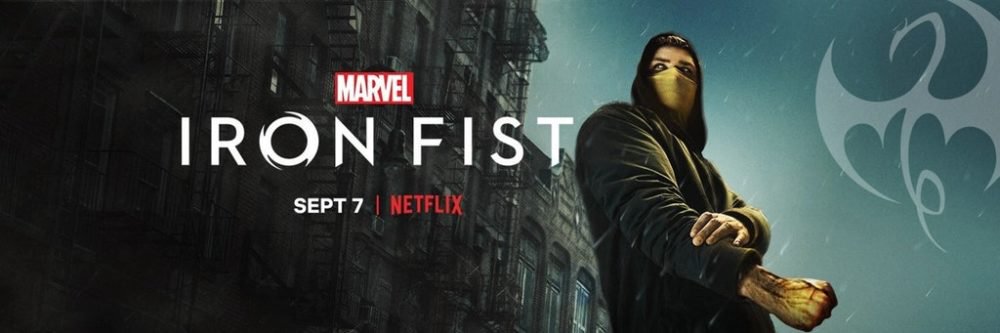
More Like It, But Not Yet Enough - Iron Fist Season 2, Reviewed

A quick recap then: no one liked season 1 of Iron Fist.

The show was not without its moments, but they were few and far between, and almost none of them related to the titular character or his spectacular background (i.e. raised in a Shaolin-style monastery in an extra-dimensional city, and trained in martial arts until he can best the mighty dragon Shou-Lao and take his power to become...the Immortal Iron Fist!).

The biggest problem with season 1 were the fights. There weren't enough of them, they didn't look very awesome, and the least convincing combatant was the star, Finn Jones. His character, Danny Rand, was also not written to be particularly likable, despite this being, you know, his show.

Enter season two earlier this month, with a new showrunner, improved fights, and a stated intentionality to lean into the things in the comics that made the character great. Your first clue that they have been listening to the clamour of the fans is that in the opening scene, Danny sidesteps an armored truck being rob by Chinatown gangsters, and straight-up punches the engine block out of it with his fist "like unto a thing of iron!"

For the record, I'm still a little choked they have yet to say this out loud on the show, but this single display convinced me that this Raven Metzner guy has a far better sense of what the character should be about. He spins up a story about triads warring in New York's Chinatown, and of machinations by both Danny's half-brother Davos (Steel Serpent in the comics), and his childhood friend Joy Meachum. Joy's brother Ward, one of the highlights of season 1, is back as well, and even though his story runs largely parallel to the main one until way in the latter half, it's still enjoyable.


Best of all, they compressed season 2 to a lean 10 episodes, something all the Netflix shows should consider. Not one of these shows so far has needed 13 episodes to get its business done, and they have all suffered for it (with the possible exception of Jessica Jones). The fight scenes have improved significantly, and there are even a couple of scenes with Danny appearing in a mask, although it is no where close to as cool as his comic version (and to be fair, they work that one into a flashback pretty well too). The fights still don't approach the magnificence of what we've seen in Daredevil thus far, but that is a pretty high bar to clear - I'm just happy they are narrowing the gap.


In addition to a proper maks showing up a couple of times this season, they also do a fairly decent adaptation of the Crane Sisters, which I am hoping will lead to appearances by characters like Dog Brother #1, Bride of Nine Spiders, and Fat Cobra.

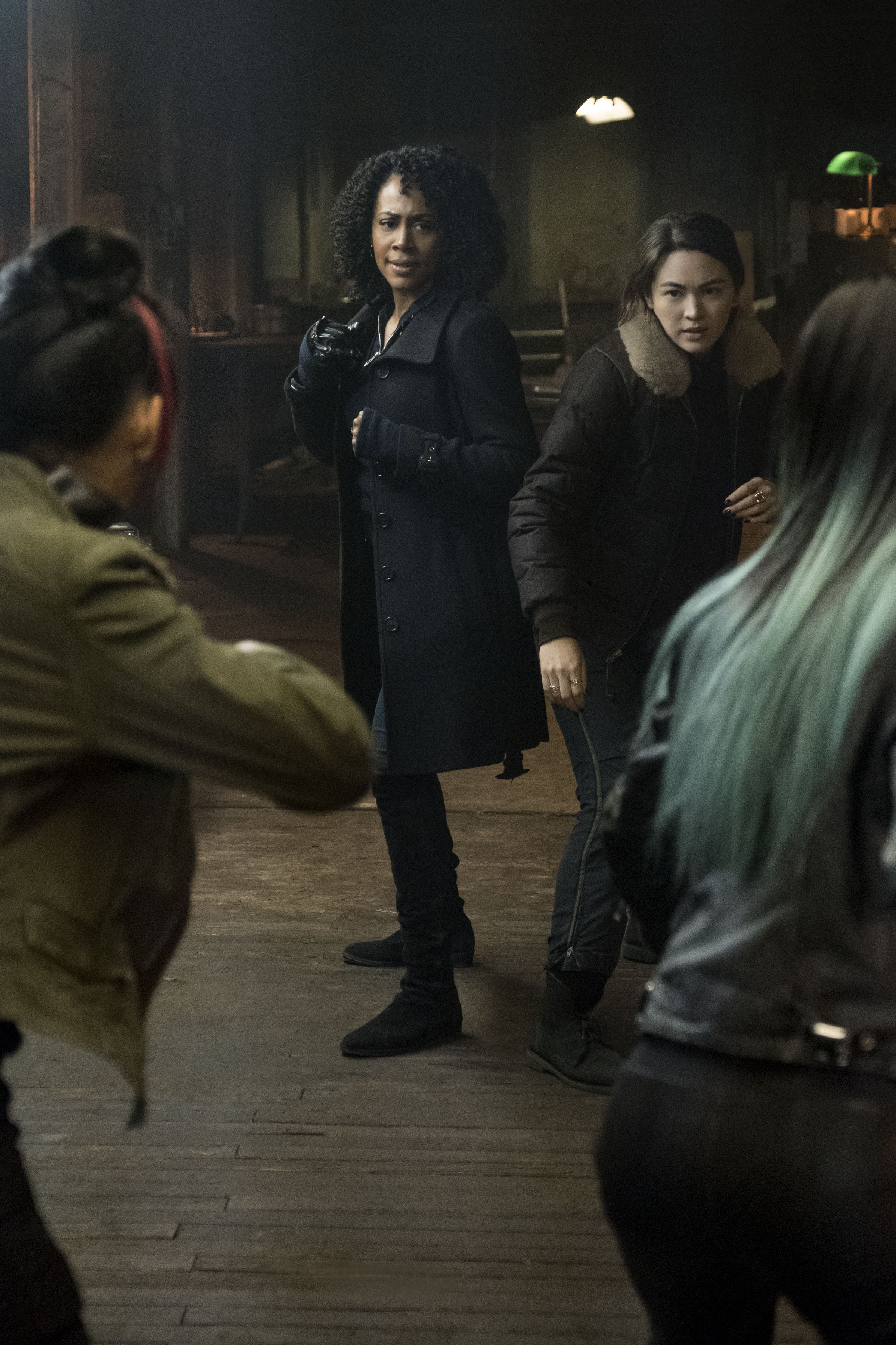
The female supporting characters though, are the highlights for this season. Colleen Wing (Jessica Henswick) and Misty Knight (Simone Missick) kick gratuitous amounts of ass with grace and humor, and display tremendous chemistry while doing it. At this point, I would love Marvel to re-title Luke Cage as Heroes For Hire, teaming Danny with his comics bestie Power Man, and then use the vacant Iron Fist slot for a Daughters of the Dragon series pairing Colleen and Misty up as private investigators, something they teased in an offhand conversation this season. C'mon, Knightwing Restorations has a nice ring to it, right?


I also can't say enough good things about Alice Eve and her take on established Daredevil foil Typhoid Mary. Playing her as one side of a person with dissociative identity disorder was an interesting way to make her a bit more accessible, and you are never quite sure if she is the villain, a heavy, an anti-hero or something in between.

I can' help but wonder if I would enjoy Iron Fist more if it was broadcast on network television. like Agents of S.H.I.E.L.D. is. AoS is a show which has improved tremendously the last couple of seasons, and has maintained a level of wonder and comics-inspired fun while not succumbing to trite silliness. The Netflix stable has a constant evocation of grimdark, in keeping with their roots on the Marvel Knights mature readers imprint, I suppose.

For all that though, much of this season is also evocative of Big Trouble in Little China, and the final episode gives hints to the larger Iron Fist mythos established by Ed Brubaker and Matt Fraction on their groundbreaking comics run... ohmigod, a decade ago now? Ugh.

The redemption of Danny Rand (and the Iron Fist show) continues apace, and this season and its disregard for the status quo has left me in a state of heightened anticipation for the next one, which is honestly more than I could have hoped for. A nice recovery, to be sure!

Sunday, July 15, 2018

Not Exactly Roughing It

We have deployed Frankentrailer to the Alberta badlands in a long-overdue return to the Drumheller area. We estimate that we were last here in 2006, and at that time we camped in a tent, but that is not the most interesting change.

I've really enjoyed this year's World Cup matches for their unpredictability, mad upsets, and only one scoreless draw in the entire tournament. Even though the final didn't contain any of the teams I normally cheer for (England, Holland, most African teams) I still wanted to see it.  Alas, nowhere in Drumheller appeared to be screening it, let alone an all-ages venue that would let Glory watch! After a couple of futile email exchanges it appeared I would have to sort myself out. A thankful combination of hospitality and technology made this possible.


It turns out that  River Grove Campground where we are staying this week has complimentary wifi. The phone I upgraded to this spring came with a free projector, of all things. I downloaded the TSN app, fired up the tiny projector, and that is how we managed to watch Croatia's valiant but doomed effort against France this morning on the ceiling of Frankentrailer, while curled up in our sleeping bags.

There were more than a few breaks in streaming due to buffering issues or the wifi connection being momentarily lost. Thankfully, my self awareness regarding my position of privilege returned when I caught myself saying aloud, "I just want to watch a live sporting match from the other side of the world on the equivalent of a 40" television, while camping, on the ceiling of my 40-year-old trailer - is that too much to ask for?"

Probably, yes, in reality; but we watched nonetheless, and enjoyed ourselves tremendously. What a time to be alive, as they say.


Monday, July 2, 2018

Second Verse, With a Twist - Luke Cage, Season 2, Reviewed

Having the house to oneself Friday night and most of Saturday was a bit of a mixed bag; on the one hand, I missed my family (Fenya in Harbin, and Glory and Audrey visiting Rocky Mountain House), but on the other, it gave me an opportunity to watch the last five or six episodes of Luke Cage, Season 2 on Netflix, which worked out pretty well in the end.

The Netflix corner of the MCU is gone from strength to strength in its most recent efforts. Yeah, The Punisher left me feeling a bit disappointed, but only because of its aloofness to the other MarvelNet offerings, while The Defenders and the second season of Jessica Jones have been solid. Jeph Loeb and company seem to be content to run a gauntlet between serious cable drama and comic book fan service, and Luke Cage S2 delivers on both accounts.


Mike Colter continues to be the bedrock of the series as bulletproof brother Luke Cage, defender of Harlem, but even that foundation can be allowed to show cracks. Luke's doubts about how to make a difference while protecting those he loves, and his complicated relationship with his father give him a much needed vulnerability.

His father is played by the late, great Reg E. Cathey, who you might remember as councilman Carcetti's advisor on The Wire. His smooth baritone coupled with his preacher's conviction make him a delight to listen to, and compelling even when he is wrong. 

On the villainous side of things, Black Mariah (Alfre Woodard) and her right hand man and paramour Shades Alvarez (Theo Rossi) are looking to finance a quick transition to legitimacy by selling the arms business which has underpinned her family's criminal empire for decades. This leaves the door open for Jamaican yardie John 'Bushmaster' McIver, played to chilling effect by Mustafa Shakir, to settle his own familial score. And what role will Mariah's estranged daughter, Tilda (Gabrielle Dennis), play in the settling of his inherited score?


You could be forgiven for thinking season 2 was taking a turn into soap opera, or at least telenovela territory, but none of the connections feel contrived (well, not too contrived anyhow), characters behave in a manner consistent with their goals and previous behaviours, even when this plays out in unpredictable ways, and the theme of family is always there to tie things together.

Best of all, the pacing feels much tighter this time around, thanks to Luke not spending three episodes gutshot this time around. I still think all the Marvel/Netflix shows would benefit from ten episode seasons, however.

Showrunner Cheo Hodari Choker and his staff have found ways to portray the modern black experience without ever having to get up on a soapbox to do it. The soundtrack, another assortment of black talent, is still one of the best thing in the show, although nothing stood out to me this time the way that Charles Bradley or Bulletproof Love did last time around. The use of reggae as a Jamaican counterpoint to the jazz/blues sound of Harlem's Paradise works tremendously well, especially The Upsetters "Chase the Devil" ("I'm gonna put on a iron shirt/ and chase Satan from the Eart'").

Despite the seriousness going around though, they still find a few ways to keep it light and remind people that Luke Cage comes from the comics. D.W. Griffith for instance, has transformed from the white kid running his uncle's theater in Harlem and renting a room to Luke Cage to the streetwise video huckster now trying to turn a profit by merchandising Harlem's hero (I may have to go to the Edmonton Expo in September just to track down an "official" 'Sweet Xmas' hoodie...)

Misty Knight (Simone Missick) starts the season short an arm (c'mon Man, The Defenders was almost a year ago now!), but with just as much indomitability as last season. Her too brief team-up with Iron Fist's Colleen Wing made a lot of us comic nerds salivate for a Daughters of the Dragon series, or maybe a one-shot Netflix movie. More importantly though, Misty finally gets one of her signature features from the comic: a bionic arm.

Effects-wise, they have kept it on the cheap, which is understandable, but distinct, which is appreciated. It would be all to easy to put her in long sleeves and throw a flesh-coloured glove on it and play things as status quo, but having it attract stares and comments or cause collateral damage on the rare occasions where she loses control is a better play, especially in the long term.

Best of all though, the rehabilitation of Danny Rand, the Immortal Iron Fist (Finn Jones) continues apace, building on the goodwill earned during The Defenders. New Danny is far more relaxed, way less uptight, more...at peace with himself, and wishing the same for his friend Luke. Sadly, Jones is not any more convincing a fighter yet, but if they go the dancer's route like they did with David Carradine in Kung Fu, I will be content. 

Critically, however,, the whininess and petulance that was so unbecoming of Iron Fist seems to have been put aside, and he's gotten his zen on a little bit, which feels closer to the truth of the character, at least for me. With a new showrunner on the second season for that show, I find myself drifting towards guarded optimism.


Like Jessica Jones S2, Luke Cage is not afraid to play rough with its toys, changing relationships and ending lives in a way that feels unexpected in the source material, but plays very well in deluxe television. The streets get grittier and grimier, and all the while, you wonder when Luke might just have to buckle. By the end of the 13th episode, the pieces have all be rearranged, the status quo has been almost completely upturned, and we are left hungering for the next installment of tv's best superpowered soul food.

Monday, November 27, 2017

To Bolder Go... - Star Trek: Discovery vs. The Orville

Star Trek: Discovery has polarized many fans of the enduring franchise, marking its return to episodic television (after an unfortunate but much-needed 12-year hiatus) with extremely mixed reactions.


Discovery marks a number of firsts for Trek being the first to step away from network or syndication standards in favour of a more 'premium cable' model, along the lines of Netflix or HBO. It is also available to far fewer viewers in the U.S. where it can only be seen on CBS' All Access streaming service.

This has allowed them to orient their material to a more mature audience, introducing the first same-sex couple in a Trek series, and dropping the first f-bombs in franchise history. Discovery is also the first series where the ship's commander is not the focus of the program.

Set ten years before the familiar voyages of the Enterprise, it also dabbles in a fair amount of revisionism, tinkering with the canonical timeline in a way seemingly designed to tweak long-time fans. Why have we never heard of Discovery's experimental drive prior to this? Where did the captain get the tribble he keeps in his quarters? Why do the Klingons look so different from any of the previous iterations? Why are we seeing cybernetic or robotic characters on starship bridges, when the android character Data was such a big deal on Next Generation almost a century later? How come we never knew that Mr. Spock had an adopted sister, Michael Burnham (Sonequa Martin)?

Burnham's famous sibling is not even the most interesting thing about her character. The first two episodes of Discovery exist primarily as her backstory, or perhaps origin, as her rash actions help catapult the Federation into war against the Klingons, and effectively ends her Starfleet career.

A seemingly chance encounter brings her under the dominion of the Discovery's captain, Gabriel Lorca (Jason Isaacs, best known as Lucius Malfoy from the Harry Potter films). Here is another crewmember haunted by their past, and although not quite as driven, Lorca shares more traits with Captain Ahab than most of his crew would probably be comfortable with.

Having effectively done away with Star Trek creator Gene Roddenberry's oft-misunderstood admonition against interpersonal conflict has opened up a lot of fertile ground for storytelling, but also takes Discovery a step further away from what we have come to associate with Star Trek. As a result, a number of would-be fans are not watching the show, and some of them are even pointing their attentions to an unlikely competitor: quasi-spoof The Orville, starring and helmed by, of all people, the creator of Family Guy, Seth McFarlane.


The Orville is set in a carefully crafted analogue to the Star Trek universe, but instead of following the steadfast crew of a legendary ship, it centers around a significantly lower tier ship and the quirky misfits that keep her flying.

A lot of archetypes and stereotypes from previous incarnations of Trek are present, from the robotic crewman Isaac who hails from a synthetic society, to the alien Bortus, the stoic and taciturn second officer whose species have only a single gender. A waif-like but super-strong security chief, a couple of wise-cracking helmsmen and a captain and first officer who were once married to each other (Seth McFarlane and Adrienne Palicki) rounds things out.

The bridge layout, colour coded uniforms and presence of a Planetary Union instead of a Federation make the homage even more obvious, but the bickering, job dissatisfaction and knowing winks and nods thrown to long-established tropes put a fresh spin on things.

Although The Orville is funny in an earthy, prime-time Fox sort of fashion, I was astonished to see how much seriousness existed in the stories themselves. Like the original series, they make effective use of taking existing trends or problems and extrapolating them to the Nth degree, such as a planet where social media has replaced the justice system, and an undercover crewman risks reprogramming after being caught on video dancing inappropriately with a statue. Or the ethical debate that ensues when Bortus and his partner ask to have their child's sex reassigned after being born female, something considered a rare birth defect on their homeworld.

Given the maturing of our collective tastes in science fiction, it becomes difficult to take established Trek concepts like universal translators or such a casual approach to first contact scenarios seriously, but within the framework of a lightweight adventure/comedy they become a lot easier to swallow, as the whole affair is taken much less seriously. As Mystery Science Theatre 3000 used to remind us, "it's just a show, I really should relax."

Most surprising of all is how seriously Seth McFarlane takes his role as starship commander Ed Mercer, and how effective he is at it. Despite having limited his career by showing up to work hungover on many occasions after discovering his wife's infidelity, Mercer is not portrayed as a buffoon, but as a flawed officer who still cares about his crew and doing the right thing. That he does so in between dick jokes and offhand workplace humor is just incidental, and last night I watched him give a firm but supportive pep-talk worthy of Kirk or Picard to a troubled crew member with nary a chuckle or smirk in sight.

In the commentary on science-fiction sites like io9, many Star Trek fans have said that the dark tone and moral ambiguity of Discovery (and for some, what they feel is a lack of respect for prior canon) have driven them to the whimsical idealism and visual familiarity of The Orville, which I can completely understand.

On the other hand though. I have really enjoyed the first half of Star Trek: Discovery's first season. The production values are amazing, even if so much of the technology transcends even what we saw on Next Gen and I too am curious how they intend to reconcile the historical inconsistencies. I appreciate how they have loosened the leash on opposing views between the crew but have maintained respect in their interactions (for the most part). As much as I would love to see a post-Deep Space 9 series taking the franchise into the future where it belongs, I am forced to admit that witnessing the earlier days of the Federation makes for compelling viewing.

And despite the overtures to a more mature audience (and perhaps more cynical as a result), the idealism at Trek's heart can still be found there; you just have to look a little harder in some instances.

So which one is truer to Trek, in spirit if nothing else? That is difficult to say, and in the end, perhaps completely unnecessary. There is no question that Star Trek: Discovery is a darker and more mature take on the franchise, with conspiracies, politics, hidden agendas, and all the less-than-ideal products of the human heart (and alien as well). Open defiance of orders? Vulcan terrorists? Roguish, hapless Harry Mudd capable of cold-blooded murder?

It's a lot to take in, and a considerable change-up from what me are used to. Despite all this, or perhaps because of it, Discovery still feels more like the original series than anything that came afterwards, at least to me. The newness of everything, the uncertainty, stands in stark contrast to the safe familiarity of the Federation by Next Generation, where many of the Enterprise-D's missions consisted of hosting or conveying important characters or plot devices, like a combination space-going convention centre and taxi service.

In the meantime, The Orville cloaks a great heart built on an unmistakable love of Star Trek within a shell of quick gags and reference humor. I've loved sci-fi comedy since Red Dwarf, and while The Orville is neither as clever nor as subversive as it was, it is enjoyable and accessible. For a comedy, they do action pretty well, with fights featuring characters thrown every whichaway. They have only minimal amounts of continuity to speak of, making it far more accessible than Discovery as well.

I just figured out what it reminds me of: the classic Trek episode "The Enemy Within". You know this one: a transporter accident ends up splitting Kirk into two selves, one compassionate and selfless, the other more instinctive, impetuous, and violent. (You may remember it as the episode featuring the adorable unicorn space dogs that befall the same fate as Kirk.)


As a child, I remember wondering how Kirk was going to defeat his 'evil'self, until Spock explains that the captain needs that hardness, that edge, the ability to make tough calls and hard decisions; his noble and savage selves would need to be reintegrated. This was heady stuff for eight-year old me, and was my first introduction to the world as being a place of not just black and white, but also shades of grey.

Perhaps these two programs reflect two different aspects of the same beloved universe: one exploring the darkness, the other gravitating towards a lighter and more nostalgic tone?

There can't possibly be any intentionality or grand design between two wholly different networks developing two unrelated and competing shows at the same time.  Still though, the simple fact that a darker, more 'adult' version of official Star Trek product was released at almost exactly the same time as a goofy, humor/adventure derivative of it is a pretty astonishing coincidence.

In the end, I don't think anyone can really tell you which show is 'better', and I'm certainly not going to try. I will tell you that, in their own ways, they are both brave television and reflect a dedication to the different ideals presented by Star Trek, and there is no reason a person cannot enjoy both of them, as I am. It's nice to be given a choice, don't you think?

Saturday, November 25, 2017

Center Mass, But No Ten-Ring - Marvel's The Punisher, Reviewed

Marvel's popular vigilante character, The Punisher, is problematic no matter what media he is depicted in.

Originating as a one-off Spider-Man villain in 1974, ex-Marine Frank Castle rolled through the Marvel Universe conducting a one-man war on crime and occasionally running afoul of heroes like Captain America. Bits of his backstory were slowly teased out, revealing that he had lost his wife and children  after they had the bad fortune to stumble onto a mob hit. Declaring war on crime, the mob initially but more comprehensively later on, he brought lethality to a medium that had previously left criminals trussed up for the police, or perhaps suspended by webbing from a lamppost.

The Punisher provided a great foil for traditional heroes with a traditional morality, and nowhere was this better highlighted than in his appearances in the classic run on Daredevil written by Frank Miller and drawn by Klaus Janson back in the early 80s.


Daredevil (and attorney alter-ego Matt Murdock) sees Castle as a hypocritical and amoral murderer, no better than the criminals he preys upon. The Punisher meanwhile mocks DD as an ineffective liberal, too soft to do what is needed to really stop crime. Their physical and philosophical feud made a real impression on me as a teenager buying his entertainment off the spinner rack.

Later on, when I was getting my comics at a specialty shop in Edmonton (Starbase 12, actually), things changed when the Punisher got his own title with a limited series from Steve Grant and Mike Zeck. Grant supplied a great modern crime story and all the trappings to make Frank Castle a bit more sympathetic, explaining how some of his more irrational behavior (shooting at jaywalkers and such, for example), was the result of his being poisoned during one of his periods in prison. Zeck supplied some brilliantly painted covers, and it was not too long after this that The Punisher got his own ongoing series, written by Mike Baron.

Baron is also no stranger to vigilantism and philosophy, having dabbled extensively both in his sci-fi comic Nexus, but the real fights took place in the letters column every month. For every person who suggested an established villain or hero from Marvel's extensive pantheon for Castle to butt heads with, another fan would eschew all fantasy in favour of just watching him gun down drug dealers issue after issue.

To his credit, Baron walked that tightrope pretty well for over 60 issues, and I read and enjoyed almost all of them, but the real question remained: was the Punisher a hero, an anti-hero, a villain, or something else entirely?

Successive writers and artists have tackled the question in many ways, Garth Ennis having had the most prolific turn at the wheel, but whose well-known distaste for superheroes had the Punisher getting the better of anyone in tights who came after him, including Spider-Man and Wolverine. The latter of these he ran over with a steamroller, knowing it wouldn't kill but would remove him from the fight fairly authoritatively. As comics became more and more adult, the crimes depicted in them got progressively darker and more disturbing, and Castle's punishments got more graphic and outlandish as well.

Seeming to live in his own comics universe by this point, and garnering attention with dramatically shadowed and realistic cover art from Tim Bradstreet, The Punisher became more and more popular as did his skull logo. Military personnel drew it on vehicles and helmets, some units even adopted it into their morale patches. Astonishingly, a Kentucky police station actually put it on the hood of their police cruisers until public outcry forced its removal.

I bring all of this up simply to give some context to what has gone on with character prior to the arrival of Marvel's The Punisher on Netflix last week, and to explain where I think the tv characterization has missed the mark.

Jon Bernthal's tortured portrayal of a broken man dealing with tremendous trauma and loss rings just as true here as it did in the second season of Daredevil, and he is unquestionably the best thing in it. In the comics, Frank Castle may have anger issues, but Bernthal's rage-filled revenant is an anger issue. Where the comics depict a coldly calculating and dispassionate warrior, the small-screen version is a long fuse leading to an enormous keg of screaming, grunting, bestial avatism. It's alternately compelling and horrifying to witness, but an effective choice for television.


Less effective in my eyes is the fact that this Castle's vendetta is a personal one. In the comics, the senseless and random deaths of his family drives him to declare war on all crime, but here he is directly avenging the deliberate murder of his family to prevent him blowing the whistle on a conspiracy. Although this makes his motivation more understandable and the character a bit more relatable, it limits the future storytelling possibilities. Frankly, making his goal of immediate revenge more rational almost undermines the character by making him indistinguishable from a host of other vengeance-driven characters. (And for the record: no, I didn't like it when Tim Burton set it up so that the Joker killed Bruce Wayne's parents either, or when those South Africans admitted to killing Rigg's wife in Lethal Weapon 2.)

For another thing, the Netflix Punisher has absolutely no connective tissue to the other Netflix Marvel shows or the Marvel Cinematic Universe. I get that Chris Evans is not going to drop by to throw hands with Jon Bernthal (although I'd love to see it!) and that we don't need to see Jessica Jones poking her nose in unnecessarily, but there isn't even an attempt to show the Punisher as existing in a world different from ours. There is no Stark Industries tech seen during the scenes in Afghanistan, no sign of the damage from the Battle of New York or even a mention of the destruction of the Midland Circle building from The Defenders. Even a "get a load of  this guy-thinks he's Thor..." when Castle prepares to defend himself (gruesomely) with a sledgehammer would've been a nice touch.

To me at least,  a big part of what makes the Punisher the Punisher is the fact that he lives in a universe where lots of folks on both sides of the law have extraordinary abilities. Having to deal with super-strong, bulletproof, or flying adversaries through a combination of intelligence, cunning, skills, equipment and nearly Batman-levels of planning helped Frank Castle to stand apart from a whole array of similar characters in other media (I'm looking at you, Don Pendleton's Executioner (and also a little bit at Charles Bronson in Death Wish)). Without this, there is almost nothing to distinguish the Punisher from almost any other vigilante character, outside of a flamboyant mode of dress based on an overarching cranial anatomical theme.

And even the costume gets short shrift in the Netflix, version, with the classic look only appearing in two episodes out of 13.  To be fair, it's not like Charlie Cox slides into his red suit for every episode of Daredevil , but between this and the fact that the showrunners made a big point about the fact that there would be no links to events from The Defenders, and no fantastic elements, I'm a bit disappointed. We've come so far in letting comic book characters in movies and tv look and act like their funnybook counterparts, it's a bit of a letdown not carrying on through The Punisher.

Honestly, if there is one character who could benefit from being portrayed as living in a world other than our own, it is Frank Castle. In the comics, The Punisher has gone up against powered armor, mutants, witchcraft, ninjas, vampires, Doctor Doom and the Kingpin. Facing him off against former servicemen who are now amoral mercenaries if not outright terrorists, bankrolled by corrupt officials in the public service, is just a little too close to 'the world outside my window' than I would care to admit. And this is to say nothing of how to sympathetically portray a troubled individual who uses guns to solve the vast majority of his problems  less than a month after yet another mass shooting has taken place. Realism could end up being the boat anchor that most limits the Punisher in future outings.

And speaking of realism, the show's one capitulation to the fantastic seems to be the sheer amount of damage that Frank Castle is capable of enduring. Seeing the effects of Bernthal being shot, stabbed, blown up, beat up, and tortured made me think they should have named his character The Punished instead.

All of this probably makes it sound like I didn't enjoy anything about Netflix's iteration of The Punisher, and that is not precisely true. It is a gripping tale of vengeful justice with a great actor in the lead role, despite the departures it takes from the source material.


The best thing it has going for it outside of its lead is a great cast of tremendously interesting supporting characters.  Some of these are former war buddies of Frank's, from Curtis Hoyle (Jason R. Moore) who runs a support group for other vets in a church basement, to Billy Russo (Ben Barnes), who now heads up a private military corporation. Billy also runs tactical training exercises, which is how he encounters Agent Madani (Amber Rose Revah) of Homeland Security, who is fervently searching out clues for an unsolved murder she left behind in Afghanistan which eventually leads her to you-know who.


The most intriguing character, however, is Micro (Ebon Moss-Bachrach). In the comics, Linus Lieberman is a hacker and engineer known as Microchip who serves as Alfred to Castle's Batman. His Netflix analog is a principled whistleblower who ran afoul of the same conspiracy by leaking footage of the murder to Madani, and sees Frank Castle as a means of achieving his goals. Complicating matters is the fact that he has allowed everyone to believe the conspirators killed him a year ago, including his wife and children. His only contact with them is through the surveillance cameras he has surreptitiously installed in their home, seeing their challenges and heartbreak but unable to do anything about it.


Although their relationship starts out adversarial, Micro and Castle share this fascinating dynamic of two men separated from their loved ones, but are differentiated in that one of them is ostensibly working towards a happy ending that the other can never have. When Micro has to watch someone as dangerous as Frank Castle interact with his daughter and young son, his envy and discomfort is palpable, a real credit to the actor.

As an action series with a tightly wrapped story, The Punisher has a lot going for it, and most of this is due to its willingness to focus on the characters around him. In a lot of ways it is a series about trauma and the ways that people deal with it, like the troubled young veteran in Curtis's support group who is finding it difficult to fit in. This makes a lot of sense dramatically; after all, you know they are unlikely to kill a cash cow like The Punisher, but what about the young co-worker from the construction site? In the very first episode he tries to reach out to an incognito Castle who is struggling to leave violence behind him, but after being rebuffed, he gets coerced into pulling a robbery.

Despite the fact that it didn't feel very much like The Punisher to me (and there are no doubt a ton of dudes from those old letters pages who will disagree with me), it was a decent watch and I will be likely to check in for the inevitable second season. Here's my wish list for that endeavour:
  • Start the war - and reveal what compels Frank Castle to pursue criminals now that his family's murder has been avenged. Not revenge again though; this time, it's impersonal.
  • Make mine Marvel - remind us that this story takes place in the same world as Iron Men and thunder gods. Take your cues from Spider-Man Homecoming (but maybe not the tone).
  • Embrace the fantastic - Baron's run had some wonderful notions that were unrealistic but accessible, like the yakuza trained accountants who kept all the Kingpin's financial records in their heads. Normal sucks; why would you want to be that?
  • Anthology format - do you really need to build to a confrontation with a big bad? Or could you have a set of mini-arcs like last season's Agents of SHIELD, and go from investigating a militia, to infiltrating an outlaw biker gang, to taking down their cartel drug suppliers in South America? 13 episodes is as much screen time as four movies...
  • Leverage the Netflix Universe - as long as Kevin Feige is intent on keeping the MCU and Netflix in separate sandboxes (which makes sense in terms of tone if nothing else; could you imagine Tom Holland's Spider-Man vs. Bernthal's Punisher? Ugh...), then make use of what you have access to. If Daredevil doesn't come after Castle now that he is back killing people in job lots, there's going to be some explanations needed. Set up an arc with Alfre Woodard's Black Mariah from Luke Cage, or Vincent D'Onofrio's brilliant Kingpin, with a possible resolution in a second season of The Defenders.

The Punisher can be an intriguing character (even though Joss Whedon hates him!), and I hope that future seasons take a step back towards the comics that spawned him, but they haven't lost any real ground here and have a great lead in Jon Bernthal. They are close in some ways, but definitely off the mark in others - I'm definitely intrigued enough for another (9mm) round.