Given that modern Green Lantern comics are a rollicking space opera featuring the titular space cop using their immensely powerful ring to fight menaces even more terrifying than the ones we have to deal with IRL on Earth, such as an entire spectrum of power ring corps on an emotional spectrum, it is not too surprising that a lot of comic fans have decried HBO's more grounded Lanternsseries, some calling it a travesty for the way it depicts one of its two characters: the original Silver Age GL, Hal Jordan (Kyle Chandler).
And you know what? Fair enough. If you tuned into the first live action series expecting a sci-fi buddy comedy in space, you were bound to be disappointed. If you were looking for a show picking up where animated predecessors like Justice League or Green Lantern, where the Hal and his traine/ replacement John Stewart (Aaron Pierre) have a barely masked antagonissm towards each other, you were bound to be a little bit put off.
Or if you were anticipating a focus on adventure and wer then forced to 'settle' for an unsettling, time-jumping procedural featuring a deductive infiltrator investigation and murder mystery, one of which takes more than a decade to resolve, your disappointment makes sense to me. I see you.
I don't see you closely or super clearly though, because I really liked Lanterns.
I will not outline much of the plot becuase dang, they take their time playing this one out, and they pack a few great twists along the way, but I feel they tied things up, both logically and emotionally by the eighth episode and season finale.
They answer some great lore-type questions along the way, too, like "who is the real Green Lantern of sector 2814?" and "wait, how can there be more than one?", but that feels almost incidental.
The real story is about personal growth and courage, and the role fear has to play in that. As well as the role race has to play in fear. This prespective caused more than a few people to step off the fan train, calling the series woke and saying race politics has no place in a superhero adaptation.
This, despite the fact that when the character debuted in 1972, he was clearly an anti-authority figure committed to black empowerment, not unlike the Black Panther Party spokespeople of the day. And Neal Adams even had to fight to give John Stewart a darker skin tone than black characters had up until that point.
Taking a lot of cues from HBO's True Detective series in terms of tone and pacing, there is more than enough galactic scale and science-fiction shenanigans to differentiate it from other shows, even if they are a bit selective about overtly using the power ring and it's constructs a little sparingly. Chandler's arrogant crusty, worlde-weary test-pilot superhero has been critiqued as being too much of an asshole, but two things about that:
1) a lot of fighter jocks, especially test pilots, will tell you that ego is at least as big a part of their makeup as willpower (the core requisite of being a Green Lantern) and a lot of people will register that level of confidence as arrogance and yeah, potentially assholery.
2) there are times when John Stewart is every bit as much an asshole as Hal, and Pierre carries off the balance of fearlessness, frustration and ambition with considerable aplomb.
To tell you much more runs the risks of spoilers, which I will not do, so I will say this: Lanterns also has a similar feel to producer Damon Lindelof's brilliant Watchmen (2019) series, if you have any interest in a mature approach to questions like how do we determine the character of people carrying unimaginable power as well as what sort of tasks could challenge such individuals, then don't listen to the haters, many of whom are misguided and simple, but some of which are racist and oughta know better.
Even if you are not that big on superheroes at the moment, check out Lanterns quickly before they announce season two and recap the finale in the headline or something else daft, and let me know what you think of it.
The contrast of darkness and light might entrance you, as it has me.
An interesting article about a psychological study conducted in Spain caught my eye last week:
The Batman Effect
Prosocial behavior, or the act of helping others, is essential to social life, yet the spontaneous environmental factors that trigger such behavior remain little explored. This study tested the ability of an unexpected event, such as the presence of a person dressed as Batman, to increase prosocial behavior by interrupting routines and increasing people's attention to the present moment.
"We conducted an experimental field study on the Milan subway," Professor Pagnini explains, "observing the behavior of 138 passengers. In the first part of our test (control condition), an experimenter, apparently pregnant, boarded the train with an observer." The experts assessed the passengers' tendency to give up their seats for the pregnant woman.
In the experimental condition, another experimenter dressed as Batman entered the scene from another door of the train. Faced with this unexpected encounter, passengers were significantly more likely to offer their seats: 67.21% of passengers offered their seats in the presence of Batman, or more than two out of three, compared to 37.66% in the control experiment, or just over one out of three.
Furthermore, the professor notes, 44% of those who offered their seats in the experimental condition reported not having seen Batman. These results suggest that unexpected events can promote prosociality, even in the absence of awareness, with implications for encouraging kindness in public settings.
The presence of a person dressed like Batman on a train made people almost twice as likely to give up their seats for a pregnant lady! The inference drawn by the researchers is that the appearance of something out of the ordinary can rouse us from our routine behaviours and produce different outcomes as a result. Makes sense, but their choice of stimulus gave me a bit of pause.
"Finally, it is also possible that the superhero figure enhanced the relevance of cultural values, gender roles, and norms of chivalrous help, consistent with research on the 'priming' effect associated with superheroes: the figure of Batman," he concludes, "could therefore play a prosocial priming role."
Well, certainly - and as one of the oldest and most well-known of costumed adventurers, Batman would seem a good choice (even if 44% of seat offerers said they didn't know he was there!), but there is no way to differentiate between those who did notice and subsequently offered up a seat did so out of a sense of altruism, or a desire (conscious or unconscious) to impress Batman, or if they acted out of a sense of intimidation or fear! Dude is a vigilante, after all; influencing behavious by threat or application of actual physical violence is kind of his breand-and-butter.
Batman has been portrayed in a lot of different ways duriung his 80+ years in the public eye, but I think it is safe to say he ranks among the top percentile of intimidation amongst characters appearing on lunchboxes and backpacks. I wonder how this might colour the results, and how different they might have been with a different hero in the scenario.
In terms of my own reflection though, I would far rather risk having the living crap kicked out of me by a psychologically unbalanced martial artist as opposed to having Superman look at me in a disaproving manner while shaking his head. Brr!
I am willing to wager a small sum that replacing Batman with Superman would result in even more altruistic behaviour due to 'big blue boy scout' emulation factors. But what about other comic book characters?
Iron Man: 15% chance of the seat offerer flirting with the pregnant lady
Spider-Man: 25% chance of making a joke about the transit authority, 10% chance of asking awkward questions about the pregnancy
The Flash: 10% chance of deboarding the train and trying to beat it to the next station
Punisher: 45% chance of glaring angrily at others who remained seated
The Hulk: 15% chance of talking directly to the unborn child
Captain America: 55% chance of at least three people giving up their seats, who then remain standing until they disembark at the next, regardless if it is theirs or not
Daredevil: 20% chance of standing up in a way that not only assures the pregnant lady will get it, but will deny even seeing her if asked
Doctor Strange: 15% chance of directing the lady to the seat with a complex hand flourish
It is funny to think that in 1954, Fredric Wertham's Seduction of the Innocent convinced many people that comic books were harmful and a cause of juvenile delinquency, causing such a backlash that for years, people in the comics industry would rather say they worked in pornography. Tehre has been a dogpile of debunking since that time though, and perhaps this article could take its place among them.
At any rate, it was surprising to see one of my lifelong favourite characters featured in such an intriguing study, especially with such positive societal outcomes!
Despite being the first superheroes created by Marvel Comics (yes, predating Spider-Man, Iron Man and the Hulk!), the Fantastic Four have not had much like being adatped to movies or TV. The Roger Corman version from 1994 (unreleased) is objectively terrible, the 2005 Tim Story films didn't blow anyone's skirts up, and the 2015 Josh Trank version was an utter bomb, regarded by many as being the worst superhero movie ever released, and Marvel disliked the movie so much they not only killed analogues of the actors in another comic, they cancelled the Fantastic Four comic itself.
Director Matt Shakman (WandaVision) and a host of writers have crafted a tight little adventure film (first Marvel film to clock in under two hours in who knows how long) that has great heart and expresses the core characters pretty much perfectly.
By settting the movie in a completely independent timeline (Earth 828, for artist/creator Jack Kirby's birthday), the filmmakers not only gave themselves a chance to play with a retro-future vision of New York, but removing it from an increasingly convoluted MCU continuity means absolutely no 'homework' is required by exhausted, lapsed or maybe even new viewers.
The casting is pitch perfect, from Pedro Pascal's portrayal of Reed Richards/ Mr. Fantastic as a brilliant, preoccupied but loving husband, to Vanessa Kirby/ Invisible Woman showcasing Susan Storm as being protective, diplomatic but also ruthless when her family is threatened. Joseph Quinn brings the needed sass and swagger to Johnny Storm/ the Human Torch but doesn't look out of place when displaying his own insights and intelligence.
My favourite is Ebon Moss-Bachrach as Ben Grimm/ The Thing, for carrying so much humanity and empathy through a CGI-created set of rock-like features - my compliments to the FX team! He also underplays the mopishness and woe-is-me nature so prevalent in the early FF stories. His deep appreciation of his found family does not grate against his desire to punch a threat if the opportunity presents itself.
I wish I could spend more time in retro-pastiche Earth 828, and the next time I watch this film I will pay even more attention to the billboards, ads and magazine covers (although wow it felt like a lot of product placement early on). I love that one of the montage bits early on show the Mole Man abducting the Pan-Am (Airlines) tower, and all the analog touches like tape drives for the H.E.R.B.I.E. robots.
For the first time in a long time, a Marvel picture has balanced action, character, humour and pathos proportionately while still bringing all the vibrancy and wonder of the source material. It is a wonderful thing to experience in the theaters, and a real tour de force in superhero films.
Most critically for me though, is how quickly they establish what differentiates the Fantastic Four from every other team in comics - the fact that they are a family.
Family, loyalty and sacrifice are themes that run throughout the film, and I would love to delve into them except for fear of spoiling even the tiny revelations that enthralled me. Suffice to say, this is one of the better Galactus stories I have ever come across because of the hard choices given the heroes in this story.
The love and optimism displayed in Fantastic Four: First Steps make it a great double-feature pairing with Superman, at time when the real world could use a lot of both. Highly recommended, not just to comic fans, but to anyone who appreciates wonder on the big screen.
Let me start off by saying that as much as I enjoyed James Gunn's Supermanmovie, both as a showcase for the world first real superhero and as the foundation for a rebooted shared universe for DC comics characters, my favourite iteration of Kal-el remains his portrayal on the Justice League aninamted series. (The same goes for Batman and I adored Matt Reeves' noirish take!)
After nearly a century of storytelling I think it has become apparent that, whatever the medium, is it not difficult to write a Superman story. He has an extensive array of interesting powers, many of which lend themselves well to a dynamic medium like film or television. He has an extensive and largely well-known lore and backstory, as well as one of the best rogues gallery in comic books.
So writing a story with one of the most beloved fictional characters is not supremely difficult - it is estimated that there are over 50,000 indiviudal comics featuring Superman.
The challenge is in writing a good Superman story; one that is compelling and original and surprising. And although I have some problems with the how of it, I think James Gunn has done this with Superman.
In the interest of avoiding spoilers, I will be avoiding detailed discussions of some of what I felt were shortcomings. Some of them are nitpicks and couel of them really aren't, and I felt that each of them could have been written around.
The most critical thing they got right is the heart of Clark Kent himself; a midwesterner committed to helping people and doing the right thing. Not just beating up bad guys, but saving people (and more than a couple of animals).
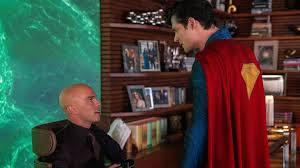
They also got the casting and the supporting cast spot-on, from the journalists of the Daily Planet (especially Rachel Brosnahan in what feels like a very Margot Kidder-influenced Lois Lane) to the other heroes in the 'Justice Gang' (esp. Nathan Fillion's arrogant Green Lanter Guy Gardner). But special mention has to go to Nicholas Hoult for portraying a Lex Luthor with all the smarts and savvy of past interpretations and then infusing him with a roiling core of anger borne out of jealousy and perceived inadequacy.
This acrimony lefd to some surprisingly mean-hearted moments that, even for a megalomaniacal and selfish tool like Luthor left me a bit surprised, but I respect the boldness of the choice. There are a few bold choices in the film, not all of which I agreed with, but all of which I think I understood.
Some of the best things about Superman is what they didn't do, however.
They didn't make it an origin story (thank Gawd)
They didn't have him straight up murder anyone, or let someone die to preserve his secret identity
They didn't make his dog smarter than they majority of other characters - in fact, notwithstanding the superpowers, Krypto is maybe the most realistic dog in movie history
They didn't get rid of the red trunks, a bag part of Superman's iconic look
They didn't make Lois a patsy for Superman, challenging him instead
As a comic-lover, there was a lot for me to like in this film. As a movie lover, Gunn gave all of Superman's weaknesses an opportunity to be exploited, from the well known mineral ones to the less-explored social ones. He gave one of the most powerful characters in fiction multiple (maybe too many) opportunities to be vulnerable and a great assortment of characters to play his strengths and weaknesses against.
The action sequences are dynamic for sure, Gunn's trademark humour is given many places to shine, but the best thing about Superman is its intrinsic belief about good - not that good will always triumph over evil, but simply what good is. The rest is nitpicking.
This is the Superman I have been waiting for for 45 years. Welcome back, Clark.
Peter David, a prolific comics writer oft referenced as PAD among his many fans, died today at the age of 68.
It is a tragic passing in many ways, firstly because of his age, but also due to the heartbreaking health situation he had been in for many years now, and the fact that being an enormously successful comic writer for decades still somehow left him underinsured. His second wife had run multiple GoFundMe campaigns trying to keep up with expenses.
I first encountered PAD with borrowed works during university, and I can't recall which came first. A friend lent me the Star Trek TNG novel Vendetta, which pitted Picard and his crew against the Planet Killer from the original series, and the dazzling revelation that it was likely created as an anti Borg weapon. The cyborg assimilationists had only been spotlighted perhaps a year before, and David's novel showed not only a fantastic depth of knowledge of the original Trek canon, but he applied a willful and imaginative playfulness to it. Later on I went on to collect a lot of the Star Trek comics he did for DC, including The Modala Imperative and Who Killed Captain Kirk.
But when a friend loaned me issue 377 of The Incredible Hulk, which revelaed tormented Bruce Banner to actually be a victim of dissociative identity disorder (then referenced as multiple personality disorder). The idea that his alter ego Hulk was not just a Jekyll/Hyde phenomenon, a crude reflection of a timid scientist, but rather a manifestation of trauma wrought by an abusive father and seeing his mother killed in front of him. As a psychology major I found this all fascinating, as well as tragically compelling.
Guided for a time by superpowered psychotherapist Doc Samson, David took readers on a fascinating psychological journey that, in between building-shattering battles and villainous schemes, dealt with psyche, leadership, ego, love, death, responsibility and a host of other topics. He made perpetual teen sidekick Rick Jones (a cast member since page 3 of issue 1 and eventual partner to Captain America and Captain Marvel!) into a capable character in his own right, with an agency of his own to boot.
PAD wrote that book and that character for twelve amazing years, for even more issues than Stan Lee, the Hulk's creator did, putting an indelible mark on a legendary property while also showing how creatively established tropes can be repurposed.
David's list of works is long and impressive, but he was also an impressive person. He had strong opinions about the rights of comic creators, gay rights and several liberal causes, and shared them widely and articulately. But he also apologized when he found himself in the wrong; something that feels increasingly rare.
He wrote all his stories with an amazing blend of pathos, humanity, drama and especially humour. He also had an eye towards social justice, having been bullied as a child alongside his best friend, who was gay. Not many guys were writing about AIDS in the late 80s, but David was, eventually earning a GLAAD award for it.
I think the most recent book of his I purchased (as opposed to the volumes I read and re-read on the Marvel Unlimited app; including a current re-read of his epic Hulk run) was the comic autobiography he helped Stan Lee to write a decade ago, Amazing Fantastic Incredible. It's a good read that at least tries to address some of the controversies over how this legendary writer and promoter treated some of his collaborators.
Peter David has left enough work out there that I can keep discovering it for years to come, but learning his unique voice has been silenced far, far too early has really cast a pall upon my spring.
I had a whole Thunderbolts* review written here, hit a key combo by accident and lost the entire thing.
So let me just say this:
great film and a wonderful time
best MCU flick since Endgame? Probably yes, but let's not dismiss the two excellent Spider-Man films in there too...
stellar post-Avengers cast - Florence Pugh, Sebastian Stan,Wyatt Russell, David Harbour and Julia Louis-Dreyfus
dances with admirable skill and rhythm along a very thin line between dark, funny, and darkly funny
ties in to established MCU lore without feeling like homework (a criticism Kevin Feige has made himself, actually)
a team of anti-heroes brought together in a story tied inextricably to mental health? Bold!
managed to stick the landing on both the team name* (and the asterisk)!
best post- (really post) credit scene since Phase 3 (and it was only shot three weeks ago)
If you feel done with superhero flicks, this one might not change your mind, but if you enjoyed them at some point in the past, you should maybe oughta give Thunderbolts* a chance? It is not only distinct, but gives solid hope for future MCU films.
And I know all my fellow comic nerds have already seen it or have made plans, so we good.
Since Avengers: Endgame, Marvel's movies have suffered from more than a bit of "what do you do for an encore?" None of the entries in Phases 4 or 5 have grabbed the interest of viewers the way previous entries did, which I suppose is kind of natural - not only is the Infinity Saga a tough act to follow in general, Captain America boasts what is likely the best superhero trilogy ever with First Avenger, Winter Soldier and Civil War. So to say that both Anthony Mackie and his character Sam Wilson have some immense boots to fill in Brave New World is a fairly significant understatement.
So let's get this out of the way: it's a fairly mediocre movie, as movies go. With the exception of the villain reveal (which Marvel has done a great job keeping out of most of the trailers and such), there is next to no tension in this film - next to nothing in the way of surprises.
Given the death of William Hurt and the recasting of the legendary Harrison Ford as Gen. (and now President) Thaddeus "Thunderbolt" Ross, I don't know how they could have marketed this film without spoiling his inevitable transformation into the Red Hulk, but wouldn't that have been cool?
The aerial scenes are great but the on the fight segments on the ground don't appear to be up to the high standard we've come to expect from the MCU, although the climactic showdown is handled pretty well over all. But they also aren't throwing them in every seven minutes to keep you awake, so that's good. Does it feel like director Julius Onah is out of his element at times? Yeah, kind of. Is BNW too 'woke'? No, don't be stupid - what the hell does that even mean?
Story-wise, turning the snake-themed villain cadre the Serpent Society from the comics into a mercenary outfit with the same name led by an uncostumed Giancarlo Esposito as Sidewinder was a welcome discovery. It is a new nod to the slightly more grounded villainy the previous Cap had to deal with, and was apparently one of the big elements added in reshoots. And yes, reshoots are never the kind of thing you want to hear about, but I am willing to bet they came away with a stronger movie than they might have had without them, and besides, who doesn't like a bit more Giancarlo in their genre cinema?
So in some ways, CA:BNW feels a little like a salvage operation, not unlike the second Black Panther film, Wakanda Forever. And like it, I think the filmmakers deserve some kudos just for pulling off something coherent and entertaining while navigating the increasingly complex continuity of the MCU.
For my perspective, an adequate entry in the series is a little disappointing (given the strengths of the previous films) but not a loss or a defeat in any way. But remember, I am not buying my ticket as a movie fan who likes comic movies; I am going because I am a comics fan who wants to see beloved properties treated with respect.
And I got that, for the most part.
I like Anthony Mackie as Sam Wilson a lot, and the film pulls no punches in showing that, as Pres. Ross tells him to his face, "you are no Steve Rogers." He is not as strong, not as fast, not as durable, nor as resolute. But they make it clear that his heart is just as big as skinny Steve's, the kid from Brooklyn who could do this all day and hated bullies.
Linking the story to Carl Lumbly's Isaiah Bradley, who received the super-soldier serum during the Korean War and was tasked with taking down Winter Soldier before being disavowed and imprisoned was a great touch. It lets us address the racial issues at play with a Captain America of colour without making it the focus of the film.
Joaquin Torres (Danny Ramirez) is just as anxious to become the new Falcon as he was when introduced in the Falcon and Winter Soldier Disney+ series, and has much of the same swagger as Sam did when introduced in the second Cap film. He brings tech skills and heart, but will need more to become a sidekick we will clamor to see.
Saga-wise, I know many viewers will be heartened by the absence of a multiverse story (despite that being the name of this current set of Phases!), but be warned, it does get hinted at. Mostly I was glad to see them finally address the new landmass created by the Celestial emerging from the Indian Ocean in 2021's The Eternals. This was a movie where I remember more about the post-credits scene than the film itself, which is not a great sign, obviously.
More critically though, Celestial Island gives them a great way to introduce Marvel's other famously made-up mineral, adamantium. And having the initial tension revolve around an international treaty regarding the island and its miraculous metal was a great angle, but hopes for a Tom Clancy-like approach are never really met. (Note to filmmakers - despite being the Commander-in-Chief, the President should never be shouting orders like "launch interceptor missiles" on a warship - even if it is Harrison Ford!)
In the end, Captain America: Brave New World is by no means a must-see, even if you haven't succumbed to "superhero fatigue." But if you are curious at all about the progress of a character willfully stepping into shoes too big to fill, or the evolution of the MCU in general, we certainly didn't come away feeling disappointed.
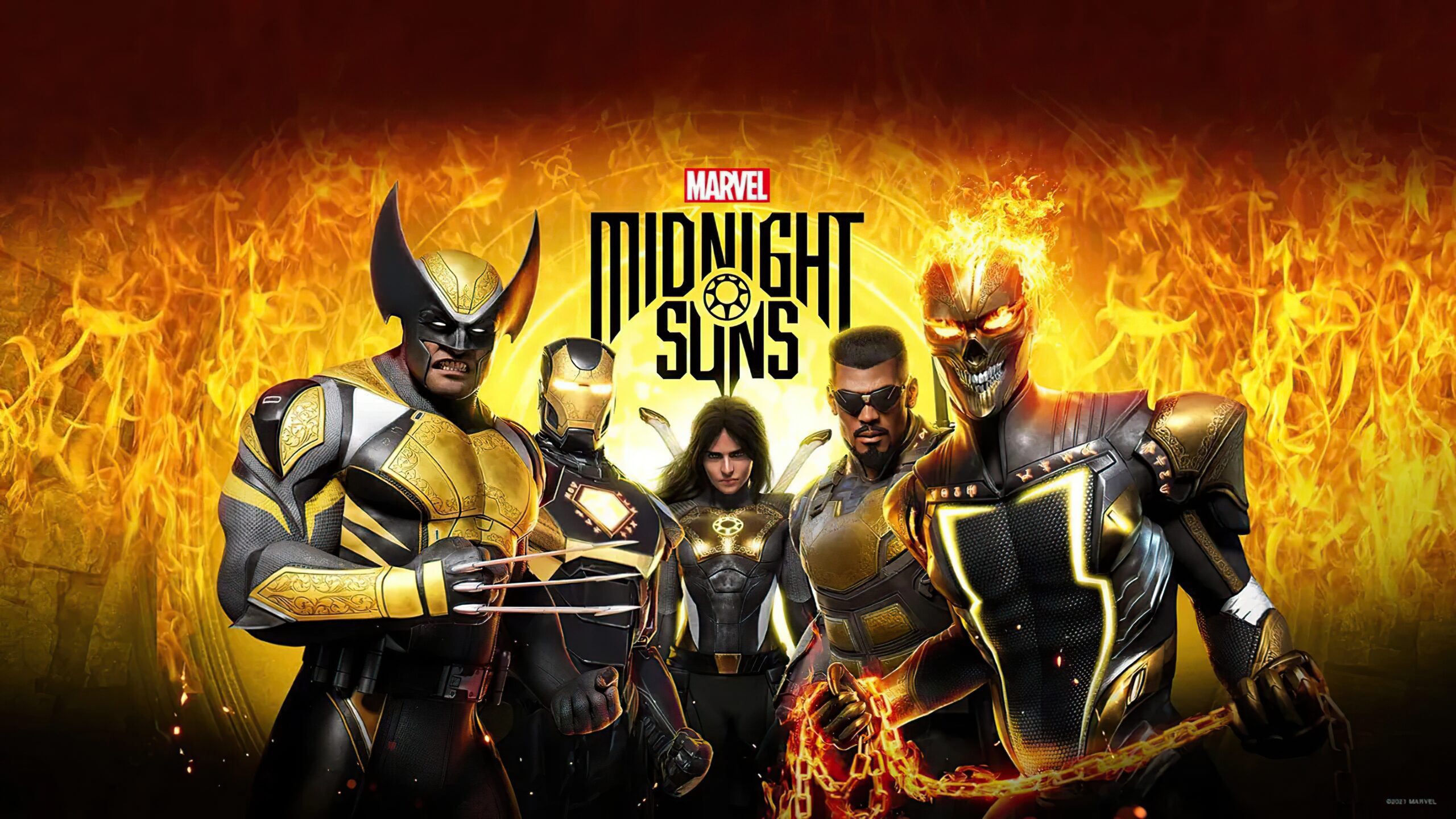
I am looking forward to getting more painting and reading done now that I have finally finished playing Midnight Suns on the PlayStation.
Even though I am still using a past-generation console, I still dislike getting my video games upon release and prefer to pick them up on sale later...often much later. This is why I only finished 2018's Red Dead Redemption 2 last fall, and I also tend to play them kind of exhaustively (all the side missions and anything story-related) whichh is why it took me 11 months to finish.
Midnight Suns is not an open world adventure game like RDR2 though, it is more of a...well, let's just say that to call it a comic-book inspired, turn-based, tactical card RPG wrapped around a dating simulator would not be inaccurate.
Set in the Marvel Comics universe (the original MCU!), the titular Midnight Suns are a group of established, supernaturally oriented characters from a variety of titles: Blade (the vampire hunter), Nico Minoru (the blood witch of The Runaways), Robbie Reyes (the most recent Ghost Rider), and Illyana Rasputin (Magik from the X-Men).
Facing an unprecedented assault from Lilith, the Mother of Demons and her new Hydra allies, they resurrect the last person to defeat her three centuries earlier - her child, known only as The Hunter, which is the character you will play. Such is the level of threat that Avengers Doctor Strange, Iron Man, and Captain Marvel have joined you as well, and the two groups' differing approaches will lead to friction between them at times.
I love turn based games, and having been wanting to play this ever since I found it it was developed by the same crew who made XCOM, and it has been almost exclusively awesome time.
Typical combat encounters feature three characters (some you choose, some chosen for you to fit the story), each of whom as their own deck of 8 cards. On each turn, you can play three, and the order you play them in can be very critical. You can also redraw two cards per turns, franticaly trying to trade your heal card for something more damaging early in the fight, or vice versa later on.
You can also move your characters around the battlefield, which helps you align certain attacks that can hit everything in a straight line, or knock enemies back into obstacles or hazards for addtional damage.
In between missions, you can turn captured 'gamma coils' into random new cards. In addition to newer, different abitlies or attacks, you can also combine two of the same card into an improved version. Eventually you even get the ability to build your own copies of cards or modifying them in other ways.
The role-play aspects occur as you explore the mystical grounds of the Transian abbey that is the headquarters of the Suns, finding various artifacts and eventually the spell ingredients used to create still more resources and items that can be combined in seemingly limited ways. Special challenges enable Hunter to use words of power from the Elder gods, which open up even more of the grounds for exploring.
If I am being honest though, as much as I enjoy the tactical challenges of the combat, what made me love the game is the way it handles downtime. After missions, you are often given the opportunity to 'hangout' with another character, your talk guided by familiar but well-written dialogue trees. You may also have the opportunity to share a gift with them, and finding the right gift for the right individual becomes almost a game unto itself, as does choosing an appropriate activity for the hangout. Glory mocked me mercilessly for taking Wolverine on a picnic later in the game, but it turns out the dude loves some quiet time and chow away from the crowd.
Between these activities, other dialogue opportunities and sparring sessions, you can eventually 'level up' your friendship. Doing this unlocks a few ornamental gewgaws (like wardobe choices for both Hunter and the other hero), but more importantly friendship enables aboslutely brutal hero combo cards that allows two heroes in a fight to combine their attacks. The higher the team;s friendship level, the more of these combos present themselves to you.
Generally good writing and excellent voice acting (Matt Mercer and Laura Bailey from Critical Role as the male voice of Hunter (who can also be female) and Illyana Rasputin), Michael Jai White as Blade) made the story elements most compelling for me - which is why I found the abrupt ending I experienced at 2 am Friday night to be a bit disappointing.
The final fight is a protracted, multi stage affair, without the additional selection and equipping stage I had becoem used to. I also encountered a number of bugs that appear to be kind of commonplace (where the Counter I selected (to aoutomatically attack those who attack me) didn't work on two different occasions) and which at one point told me I had lost the encounter without explaining why. Thankfully the latter only happened once, and online chatter suggests reloading a saved game can mitigate the other glitch, but it still soured me a bit.
Before heading into the final fight, you are given the opportunity to converse with any other character you wish, and knowing it to be the final fight, I of course spoke to all of them. This probably took me twenty minutes, given how large the roster is by game's end, so perhaps this is meant to take the place of an epilogue anyways.Maybe they need some appendices like Lord of The Rings, and I know there's some DLC I will want to try at some point.
Despite these shortcomings, there is an awful lot to like about Midnight Suns: creative, turn-based combat, room for creative combinations and a tremendous variety of things to do, even between missions.
Most critically for me though, is seeing such a well-established universe from such a different perspective. It was touching watching Hunter discover Magik's tragic origin story, a true loss of childhood, as well as seeing him help develop the confidence of Ghost Rider and Spider-Man. Discovering Blade started the Abbey's book club as a means of interacting with his crush, Captain Marvel was fun, as was listening to an embittered Tony Stark refer to the Midnight Suns as the 'spooky teens club.' And the in-game chat board that let's characters converse with each other is worth the price of admission.
And sadly, the game's critical successes but commercial failure works in our favour as it can nowbe found for less than $20 on many platforms; consider checking it out!
No, don’t read this and then watch it, the rest of the post explicitly references it! Spoilers abound, man.
So if you’ve actually watched it, we can proceed.
All right, to begin with, the first superhero movie I ever saw in a theater was Richard Donner’s Superman, starring Christopher Reeve. I had read a few Superman comics by this point, but that brilliant portrayal cemented itself in my mind forever. The electrified homage to John Williams’ epic score is a pretty good way to get me sentimentalized.
Making the first image of Superman a vulnerable one, battered and bleeding, is a real counterpoint to more recent depictions of this character, which I thought was a bold choice in some ways. In some ways, not so much; it’s not like people watching this are going ‘who is this guy in the tights?’, so this is a great way to establish the level of threat he must be facing.
And then the close up, and seeing that the Last Son of Krypton bleeds red blood, just like us.
When he starts to whistle, it took me a split second to key in to what he must be doing, so I was expecting Krypto the Super Dog, but not for him to show up and have Kal-El desperately ask him to take him home. So when this goodest boy just grabs the cape in his mouth and does it, I honestly started to well up and I don’t care who knows it.
But the biggest thing for me was that the first bit of superhero action we see is not an enormous punch, or an astounding feat of strength, but someone being saved as Superman places his body between an innocent person and disastrous harm.
Because this is what sets him and Spider-Man apart from most of the other comic heroes; if there was no crime, they would still spend their days saving people.
The rest of the teaser races by, and each rewatch rewards me with another tidbit or Easter egg: Hawkgirl! Mr. Terrific! Nathan Fillion as Guy Gardner! Nicholas Hoult as Lex Luthor!
And though out the entire teaser, I didn’t see the title character punch a single other character. there is some wrestling, sure, and his state at the beginning suggests a significant physical alteration is indeed in store for him.
The flag being raised, the chanting of his name rising in volume near the end, and other scenes all give a palpable sense of decency and hope, which suits me right down for the ground,
That optimism doesn’t make everyone happy, unsurprisingly, but even that response just reinforces for me that James Gunn is going about this in precisely the right way.
I mean, there are still plenty of ways to screw this up, but solid comics trilogies are few and far between (Chris Nolan’s Batman and Captain America come to mind, and few others), and since Guardians of the Galaxy is in that club, James Gunn can count on my ticket purchase on opening weekend in July.
And yes, I will bring some tissues. Wanna make something out of it?
I have been indulging in a lot of escapism of late in my continuing efforts to avoid looking at or discussing the news since the U.S. presidential election. Reading comic books on my iPad, painting miniatures while re-watching Stranger Things, playing in multiple role-playing games - these are all welcome dissociations from a threatening reality.
And in that vein, I would like to explore a potentially unpopular opinion of mine which will have almost zero bearing on the lives of most sensible people, and it goes like this: I straight-up hate the idea of Marvel Comics character and X-Men mainstay Wolverine having bone claws.
There, I said it.
The idea that the man called Logan has always had natural, bony claws under the surface of his skin (as opposed to bionic implants added later when adamantium was added to his skeleton) has been canonical in the comics now since 1993. This is when arch-villain Magneto used his powers to strip all the adamantium from Wolverine's skeleton (messy, but honestly a pretty solid idea), including the bony claws which surprised quite a few readers (and apparently angered quite a few of the writers too!).
In 2001, the six-issue mini-series Originfully demystified Logan's backstory and confirmed, yes, bony claws were part of his original mutation.
Given the range of superpowers we have seen in comics and fanciful physical adaptations displayed by the ever-increasing numbers of mutants in the X-books, having retractable bio-swords in one's forearms is a long way from the least credible mutation we have ever seen, and once they were wrapped in metal again six years later (no idea how, btw), maybe it doesn't even matter, but it still grinds my gears something fierce.
I vastly prefer the idea that Logan's primary mutation is his healing factor which makes him very, very difficult to kill, and also slows his aging considerably. His secondary mutation is presumably his incredible senses, particularly scent and hearing, more akin to those of a wild animal.
"But Stephen!" some people might say, "surely bone claws are a natural pairing with the other animal-like qualities displayed by the character? In fact, wasn't creator Len Wein's original plan to reveal Wolverine to be an artificially evolved or otherwise enhanced actual wolverine (Gulo gulo luscus)?"
Absolutely!
If we are talking about claws supplanting fingernails on the end of phalanges, like Wolverine's nemesis Sabretooth, that is.
The idea that a naturally occurring mutation, in addition to making a random individual nearly unkillable and enhancing their scent, hearing, sight etc., would also see fit to put three (not four, not five, to match the aformentioned phalanges) fully retractable, knife-length claws in their forearms unlike anything else in nature?!
I have read comics nearly my entire life. I can take a lot of stuff on faith and my capacity for the suspension of disbelief is tremendously high, but it is not infinite. That just seems dumb to me.
Particularly when there is a much better explanation available!
Logan was already a formidable opponent prior to his being augmented by the Weapon X program, where some government or agency or what-have-you made his skeleton unbreakable by either replacing it or bonding it with the fictional metal adamantium. It is a very short trip from there to having some officious knob saying, "hey, as long as you're already under the hood, why don't you pop a set of three enormous switchblades in this guy's arms?"
X-Men artist and co-plotter John Byrne clearly felt this was the case over a decade earlier when he drew the legendary "Days of Future Past" story. In this alt-future tale where most of those bearing the x-gene are already dead or incarcerated, mutant-hunting Sentinel robots relentlessly hunt the rest, and one actually manages to kill Wolverine by incinerating him.
One too many 'fastball specials' I guess
The very next panel shows Logan's skeleton, but his forearms appear bionic, with a clear housing apparatus for his claws.
Later on, the Official Handbook of the Marvel Universe (still a high-water mark in 'overthinking it' that puts a lot of Star Trek supplements to shame), adds even more detail:
In fact, John Byrne found so much of the post-Dark Phoenix X-Men canon disagreeable that he wrote and drew 32 issues of fanfic (called Elsewhen and viewable here -highly recommended!) showing how he would have carried the story forward, including his own take on an origin for Wolverine.
In Byrne's version, sometime after WWII (including an undocumented stint with The Invaders, Captain America, Sub-Mariner, original Human Torch and others!), Logan has barely survived being trampled by a cattle stampede while working as a ranch hand...
...and twenty years later, accepts an offer (from the Weapon X) program to replace his shattered skeleton...
...but is unaware of the addition of metal claws until he unsheathed them for the first time during his recovery!
Now, an excess of 'logic' or 'sensibility' or, worst of all, 'realism' has been the death knell for many a comic book. But setting aside for a moment just how much more down-to-earth these bionic claws are than the alternative, look at how much pathos has been unlocked here!
The horrified expression on Logan's face as he realizes that while in the past he has feared becoming more feral, a literal animal, now he has been made into a monster - a living weapon.
Another of my favourite comic writers, Peter David, actually blames himself for the bone claw debacle, as he was at a Marvel writer's retreat and joked, "hey, why doesn't Magneto just pull all the metal out of Wolverine's skeleton and be done with it?" He never thought that the writer who actually took up the idea he had only put out as a joke would a) take it so far and b) decide that the claws were too important to leave out of the equation and made them boney as a result.
Now, to be clear, when Hugh Jackman pops the organic, cruelty-free claws in the movie version of Days of Future Past, it looks completely badass and makes for a great scene. From his look of initial surprise and eventual realization to the subsequent employment of said calls, let's face it - this is the Wolverine we came to see.
But beyond fan service, I am damned if I remember them playing any sort of meaningful role in the remainder of the story, and I note with interest that Logan is the biggest character on the movie poster, but has metal claws in that picture.
Like I said at the start, it is a largely meaningless argument with no real stakes to speak of. The decision was made decades ago and none of us bothered by it are so put off by it that we have stopped reading about the character. Because it has been undone, (in fact, a few years back Wolverine was dead for the better part of a year before returning from Hell itself with glowing hot claws...) we can each revere or ignore the bone claws and adjust our headcanon accordingly.
But with an X-Men reboot and MCU integration seemingly just around the corner (presumably following Secret Wars in 2026), there is likely another chance coming to get it right and set the record straight.
Apparently San Diego ComicCon was having a real banner day in Hall H at around the same time that I was enjoying Deadpool & Wolverine in IMAX. Hall H is the largest auditorium at the con and where Marvel Studios has dropped some amazing reveals in the past.
At the panel for the upcoming Fantastic Four movie (which I am becoming more and more excited about all the time), Kevin Feige, studio head and Chief Creative Officer, announced that the Russo Brothers would be returning to direct the next two Avengers movies.
Anthony and Joe Russo directed some of my very favourite MCU films (Captain America: Winter Soldier and Civil War, and Avengers: Infinty War and Endgame), so I was over the moon to hear they were back for more. Hopefully they can bring writers Christopher Markus and Stephen McFeely with them too.
The Russos came onstage to talk about the honour and challenge of helping to wrap up the MCU's latest 'saga'. They also announced that 2026's Avengers: The Kang Dynasty was being renamed Avengers: Doomsday, presumably as part of a pivot away from the actor who had been playing the time travelling villain Kang, Jonathan Majors. No change to Avengers: Secret Wars (2027), which makes a lot of sense since the Russos had both said that was one of the few titles that might draw them back to Marvel from their own projects.
Doomsday obviously suggests that the new villain du jour is none other than the monarch of Latveria and perennial foil of the Fantastic Four, Doctor Doom, arguably the best villain in the entire Marvel pantheon. And the Russos wasted no time in introducing the actor they had selected to play this iconic figure, and in such a stylish reveal:
That crowd reaction gives me chills every time I hear it, even though I have tremendously mixed feelings about casting Robert Downey Jr., the man who played Iron Man, as Victor von Doom. And judging from what I am seeing on the interwebs, I am not alone in my concerns.
But I am also cautiously optimistic!
Now, those of you less invested might be surprised that the return of a beloved actor to such a pivotal role in this immense movie franchise would be met with nothing but sheer joy, but the apprehension is actually quite understandable.
You see, the fear is that Doctor Doom, this distinct and well-established character (who actually pre-dates Iron Man by almost half a year!), an imperious and arrogant monarch of a fictional European nation whose mask conceals a horribly scarred visage, will become some twisted, alt-universe, "What If...?" version of our martyred Saint Tony of Stark.
This is not an unreasonable assumption to make either; the cowardice of (most) studio executives is legendary and the idea of spending so much money on an actor and then not showing his face will be a hard sell. The Thanos Saga had many heroes, but the major arcs coalesced around wise cracking, irreverent, smart-ass but still actual genius (plus billionaire, playboy. and philanthropist) Tony Stark and his armoured alter ego, Iron Man.
And there is a precedent in the source material as well: Tony Stark has been Doctor Doom and Victor von Doom has been Iron Man. Also, Deadpool & Wolverine introduced the concept of 'anchor beings,' character so fundamentally important that their removal leads to the extinction of their entire universe (a dangerous notion that I hope never leaves the boundaries of the fourth-wall breaking Deadpoolverse). Such a notion could be the angle that Marvel Studios needs in order to justify bringing Robert Downey Jr.'s Tony Stark, a real crowd pleaser and proven box-office draw, back to the MCU.
I mean, don't get me wrong, I will hate it if they go that route, but I will still likely see the films. I will never stop lamenting the missed opportunity there though. A Tony Stark/ Doctor Doom connection would be a real admission of failure to me and a lot of other fans beside. It would be a concession to unoriginality and dramatically unsatisfying in the extreme. This casting already smacks a little bit of desperation but it doesn't yet feel cheap and exploitative and I really, fervently hope that is not the direction they intend to go.
And I think there is actually good reason to believe they won't.
I have been thinking about this casting for days now, too much, really (ask anyone), and I knew I was going to write about it so I was kind of disappointed when Susana Polo from Polygon beat me to the punch and expertly expressed almost precisely how I felt about the whole situation in an article entitled "When Robert Downey Jr. plays Doctor Doom he better keep the mask on."
And I mean, that's it - that's the magic bullet right there.
In the comics, Victor von Doom does not show his face. Not never (after 80 years? come on!) but exceedingly rarely, as near as dammit to never. Even in his origin story, where a dangerous experiment at university leaves him horribly disfigured, you never see the face of the man he once was, nor the ravaged thing he has become.
This mystery, this allure, is foundational to the character - this is not a tragic figure who is trapped behind a mask of iron like the Dumas character. This is someone whose arrogance and pride is such that they choose to isolate themselves, rather than reveal imperfection or vulnerability.
So no matter who Marvel ended up choosing to play Doctor Doom, my hope would be that his is a mask that can come off, but never, ever does. In fact, I would suggest doing the origin story above strictly from von Doom's POV, which also gives you a chance to have Pedro Pascal's face peering in sympathy at Victor's ravaged features after trying to warn him of the risk, only to have an angry von Doom croak, "Begone, Richards!"
And if the mask never comes off, the comparison to Tony Stark is never an issue. No shocked recognition, no gasp of realization - there ends up being absolutely no connection between Stark and von Doom except for the talented actor who played both.
And who also played Charlie Chaplin as a young, middle-aged, and elderly man.
And who played a white Australian actor portraying a black American soldier in Tropic Thunder. (Thanks for the reminder, Zach!)
If the mask stays on, I don't think there is any danger in audiences or characters mistaking Doctor Doom for Tony Stark if the mask stays on. But is that realistic? Will studio executives let Feige spend a boatload of money drawing Robert Downey Jr. back to the MCU and not want to put his face on the posters and merchandising? Won't RDJ want to get his (admittedly handsome) face on screen at some point, as all masked actors are wont to do?
Well, maybe. But there are a few factors that suggest maybe the mask can, indeed, stay in place. (Or if it comes off, they either map on another face, distinct from RDJ's, or have it so scarred and twisted it makes Wade Wilson look like George Clooney.)
First, RDJ is the 800-lb gorilla in this scenario, not the studio execs. In addition to the aforementioned princely sum, he only agreed to return if the next two Avengers movies were directed by prior collaborators and known quantities the Russo Bros, and he got them.
RDJ is also know for getting what he wants, such as increased pay for his fellow Avengers actors. So much so, in fact, that the rallying cry for their agents was rumored to be "f**k you, call Robert."
Downey is not just a good actor, he is a great actor, and now has an Oscar to prove it (for his supporting role in Oppenheimer). But he is not ashamed of his acting in the unapologetically commercial yet astonishingly high quality and emotionally satisfying Avengers movies. He calls it some of his best work that went unnoticed because of the genre it happened to be in.
The Russos are comics fans, and even before Endgame came out, they said the only story that might draw them back would be Secret Wars, the series that got Joe Russo really into the medium. Even if no one else does, I am wholly confident they understand the importance of a masked Doom.
Kevin Feige is one of history's most successful film producers recently honoured with a star on Hollywood's Walk of Fame. He is also a huge nerd, but more critically, he understands better than anyone ever has the intersectionality between successful movies and the source material they are adapted from. Most importantly he know where to stand his ground, and I am confident he will do so on a masked Doom.
If Feige, the Russos and Downey present a unified front on this, I am confident of a positive outcome; but like I said before, RDJ is the 800-lb gorilla here, so let's consider a few other final facts. For instance, I only discovered today that he had actually auditioned to play Doctor before, for Fox's Fantastic Four movie in 2005, so portraying the character has occupied some portion of his mind for nearly two decades.
After the reveal at ComicCon, Downey said "New mask...same task. What'd I tell you, I like playing complicated characters." Now, I suppose that could mean, 'what is the connection between multiversal Tony Stark and Doctor Doom?!', but I really hope it isn't. I hope he finds Victor von Doom a complicated, intriguing and ultimately satisfying character to play: an arrogant, aristocratic and ruthless villain who is also fully human, haunted by failure, bound up in a complex code of honour perhaps even he himself doesn't fully understand.
I hope he sees Doctor Doom as a chance to bring one more brilliant performance to an epic film that will also feature prominently on lunchboxes and children's Hallowe'en costumes. and I hope he does so completely bereft of irony. Hell, I hope RDJ ends up getting nominated for and then winning the first acting Oscar for a Marvel movie - man, I would probably get that acceptance speech tattooed.
But the main reason I believe Downey might play the role as distinct from Stark comes from the reveal itself. He comes onto that stage in a crowd, anonymously, and I fully believe he is in character even after he removes the mask so dramatically, right up until he puts his sunglasses on.
There is no smirk, no smarm, not even a smile on that face; no trace of Tony Stark smugness. That face is serious, imperious, dispassionate, superior - maybe even regal.
If this is indeed the face of Doom, I hope and pray it stays behind the mask.
Although this review should be spoiler-free (as always), it is problematic for two reasons: first, I cannot be trusted. Because I am an unbashed fan of the source material (i.e. comics) even more so than a movie buff, it is impossible for me to be objective about these films, so I don't even try.
Furthermore, because I don't want to spoil anything, my hands are tied in describing much of what I enjoyed so much about Deadpool & Wolverine, but I will take a shot at it.
A lot has happened since the last Deadpool movie was released in 2018; the character has moved from a rival studio (Fox) to the MCU (Disney). Marvel has lost its once ironclad grip upon pop culture, largely due to overextension. D&W is, in fact, Marvel's sole offering for 2024, the first year with only one MCU movie since 21012 if you discount the pandemic. (Deadpool to Logan: "Welcome to the MCU! You're joining at kind of a low point...")
To be honest, I've enjoyed all the Marvel offerings to date to some extent, with the possible exception of Secret Wars, which felt like a wasted effort and missed opportunity. Sure, I've liked some MCU flicks more than others, but like the comics they are drawn from, I appreciate when the movies diverge into psychedelia, farce and even self-referential humour. But it was heartening to see how many other people were looking forward to seeing Hugh Jackman's return as Wolverine, and it was also good to see Marvel poking some fun at itself throughout the film.
And when Ryan Reynolds's Wade Wilson grabs an unconscious Logan by the lapels and clearly spies the legit superhero outfit we have waited so long to see, even he is moved to say, "well, that only took 24 f**king years...".
So let's be clear about a couple of things right up front:
If you don't like or are tired of superhero movies, this one won't change your mind.
If you found the first two Deadpool movies a little too irreverent or raunchy or gory for your tastes, give this one a wide berth as well.
But if you find the MCU's ever-complexifying canon overwhelming, I have great news - this is barely an MCU movie.
Oh, they get the studio leader and fanfare, and the Time Variance Authority (introduced in the Loki streaming series) is a critical part of the plot, but very early on they lay out enough exposition (Deadpool even exclaims "what the MacGuffin is that?" during the setup) that even newcomers can probably follow along easily enough. And Matthew McFadyen as Mr. Paradox make a great foil for the Merc With a Mouth. There is also a wonderful cameo early on from an Avengers-adjacent stalwart.
What follows is a two hour love letter to the Fox superhero movies, actually, full of bloodshed, cheap gags and cameos galore, but all three of those elements are well-handled and GOD I wish I could tell you more, but please trust me and go see it quickly if you don't want many of the best moments spoiled for you, all right?
Wolverine's hero suit becomes a topic of conversation more than once in the movie, and even prompts a sober moment of guilt-laden reflection when Logan confesses why he wears it. And if I am being honest, the costume and the cowl were enough to ensure I saw this movie in the theater (even if I had to wait an unbearably long time for the latter). Grown men on the set were said to be moved to tears when Jackman showed up in the iconic blue and yellow outfit, and the actor even said, "why the hell didn't we do this years ago?"
Beyond the suit (God, the suit! I am so happy y'all!) there is no shortage of fan-service, but Shawn Levy and company know when to hang a lampshade on it, like prior to the first big set-to between the titular characters, when Deadpool breaks the fourth wall to say "okay nerds, get your special sock ready - this gon' be good!"
And there's a lot of these fights, some of which are pretty long, which I am sure will bore Audrey to tears - but maybe not. They keep their staging pretty imaginative for the most part, with some of them getting so busy I can't wait for a chance to watch them at home with a hand on the rewind button.
But it is a solid stuff, overall. The ridiculous plot gives room for both some emotional gravitas, an excellent new villain (Emma Corrin as Charles Xavier's sorta sister Cassandra Nova, introduced in Grant Morrison's extraordinary comics run 20-odd years ago), and a chance to say farewell to some long-standing characters.
I am not in the least bit clear how the resolution of the movie might or mightn't open the door for mutants in the MCU, and I earnestly do hope they don't keep Hugh Jackman doing this until he's 90, but in a strange way, Deadpool & Wolverine will make still another very decent farewell piece to this iteration of the character (19 appearances by Jackman as Wolverine! 19!) a brighter and lighter but still emotional counterpart to bookend the more earnest and serious Logan (2017).
Commercial success appears assured with a staggering $205M opening weekend, and with Feige's workload a little lighter, I am hoping there are more Marvel successes to follow this one.
While culture warriors line up to decry the latest Marvel series, Echo, on Disney+ as more woke nonsense or whatever, Audrey and I enjoyed finishing off its five-episode run last night.
I am barely familiar with the comics background of the main character, Maya Lopez (Alaqua Cox), so the fact that her background and power suite differ from the source material is a non-issue with me. Having watched Hawkeye, however, I know the character is a former villain doing a face-turn and is a legit badass.
And I think a lot of the badassery comes from the actress herself, who, like Maya, is both deaf and an amputee with a prosthetic lower leg. This doesn't make any of her many fight scenes any less impressive, but the showrunners don't pinwheel from fight to fight. The bulk of the drama involves Maya's return to her former hometown in Oklahoma and her reluctant interactions with her estranged family and childhood friends.
Having Tantoo Cardinal and Graham Greene appear as her separated grandparents was a real treat, as was seeing nearly a half-dozen actors from Reservation Dogs (including Dallas "Willaim Knifeman" Goldtooth). The Choctaw history and mythology that make up a big part of the story are well-presented, and a pre-Columbian game of lacrosse captures both the athleticism and desperation of a sport designed to replace battles.
The real draw for this program for me, however, is the return of Vincent D'Onofrio as Wilson Fisk, better known as the Kingpin. The tension he brings to almost every exchange, and ability to transition so naturally from measured control to elemental rage makes him as captivating to watch now as when he was the heavy on Netflix's Daredevil.
For my money, there hasn't been a real Marvel knockout on streaming for me since WandaVision, and Echo doesn't quite reach that level, even if the new PG-13 rating adds significantly more edge to the fight scenes. But as a family and crime drama set in the MCU, it brings a lot to the table, and at five tidy episodes, it makes sure not to overstay its welcome.
Echo is a good romp filled with interesting characters who are not just pulled from the Central Casting pool and who all fit well under the street-level focus of this corner of the MCU, even if that street is in small-town Oklahoma. And if some people believe that a comic book show led by a deaf, physically disabled Native American female is anything but a cool thing, well, let them miss out, I guess.
The rest of you, be sure to hang around for the post credits scene that may hint at happenings in Daredevil: Born Again!